
Your Hair Is Thick. That's Not the Same as Easy.
Nine years of washing it twice a day, one product I added at night, and the six-year habit that did more than either.

RayCo-Founder & Editor
Sorry for the mini break, gents — life got busy and required my attention and time. But let's get back into the swing of things now.
The short version: I washed my hair twice a day from thirteen to twenty-two, and I thought that was looking after it. It was the thing making it worse. What actually changed my hair was washing it half as often, adding one product at night, and — the part almost nobody mentions — staying with the same stylist for six years. Here is the whole routine, and the one fact about Asian hair that explains why yours behaves the way it does.
Thick is a head start, not a routine
Worth knowing what you are working with, because it explains most of the rest.
Across the hair types that get studied, East Asian hair tends to have the thickest individual strands and the most circular cross-section. It also grows fastest, though honestly that difference is small — somewhere around 1.3 centimeters a month against 1.2 for European hair. Not something you will ever notice.
The part that surprised me is the other direction: on average there are fewer hairs per square centimeter on an East Asian head than a European one. So the thickness you feel is coming from each strand being substantial, not from having more of them.
These are population averages, and the spread inside every group is wide — wide enough that plenty of individuals sit nowhere near their group's number. It describes a tendency. It does not describe you, and you should not argue with your own mirror on the strength of it.
What it does explain is behavior. Thick, round, straight strands do not naturally clump together or hold a bend. They stand up, fall flat, or go their own way, and when the outside of the strand gets roughed up they frizz. Mine is smooth and straight and still turns frizzy given any excuse.
I washed it twice a day for nine years
From about thirteen to twenty-two I washed my hair twice a day. Once in the morning, once after sport. I was playing a lot of it, so that felt less like a routine and more like basic arithmetic.
At twenty-three I stopped playing seriously and started working. Washing dropped to once a day, at night, after work — and my hair got better.
Twice a day was drying it out, and I had been doing it for nine years. The thing that made it worse was that I had product in my hair all day by then, so washing twice meant stripping it twice.
I want to be straight about how I found this out, because it was not clever. I did not run an experiment. My life changed, my hair improved as a side effect, and it took me a while to work out which change was responsible. That is the same lever I got wrong on my face for years, in the same direction, for the same reason — washing feels like effort, and effort feels like it should help.
The one thing I added
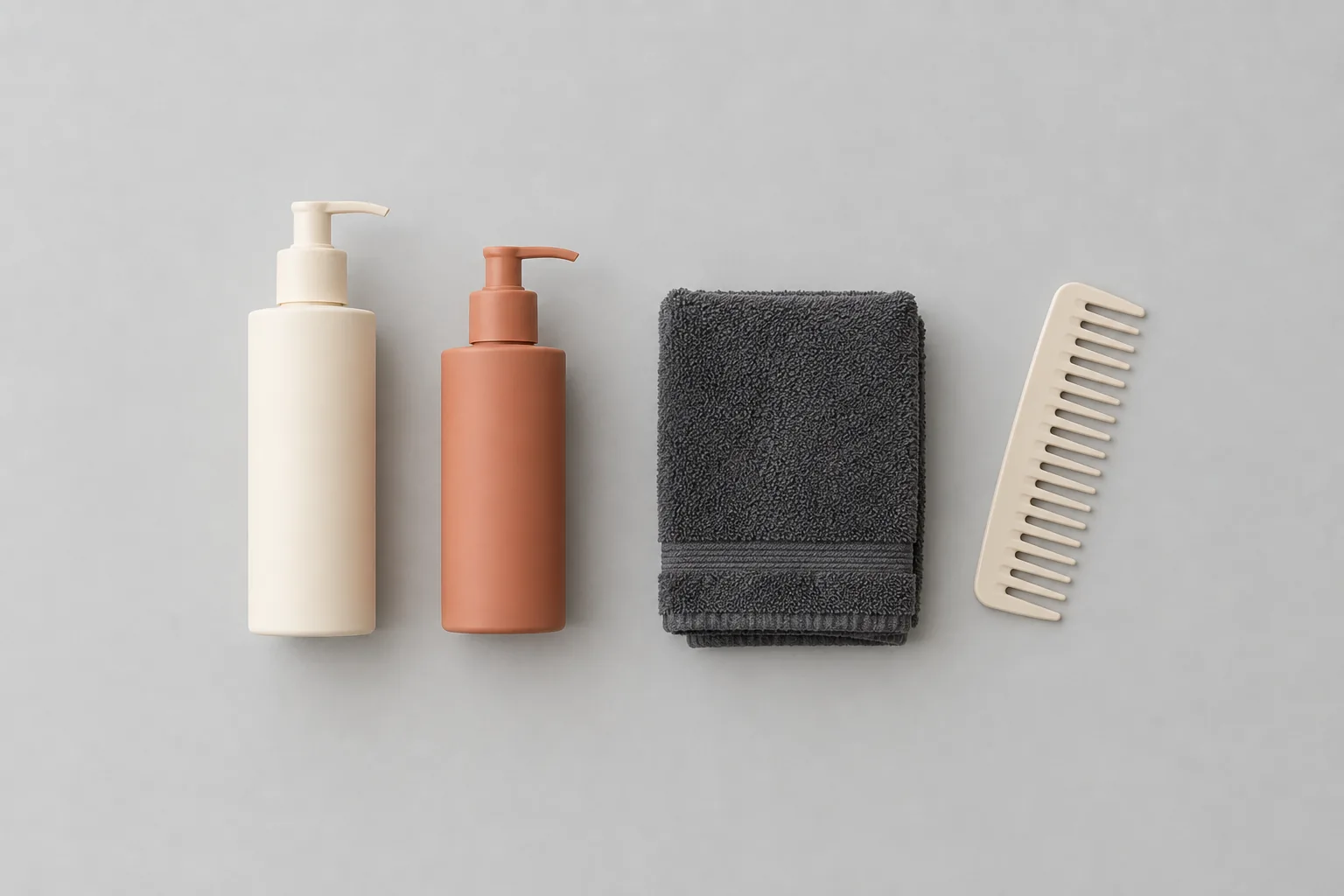
Conditioner. At night, after shampoo. That is the entire change.
My hair went from frizzy during the day to relatively smooth and fluffy. Of everything in this article, that is the single swap that did the most, and it took about thirty seconds a night.
I mention it because most men's hair care is shampoo and then nothing. Conditioner is the step that gets skipped, and if you have thick hair that frizzes, it is the step you can least afford to skip.
Which conditioner, though, is personal. Pick one made for the hair you actually have — curly, straight or prone to frizz. The bottle usually says which it is for, and matching it to your hair matters far more than the name on the front.
On brands, which matter less than you want them to
I do not believe one brand is meaningfully better than another here. It is personal. What suits my hair may do nothing for yours, and the only way to find out is to use one for a few weeks and pay attention.
That is not me being lazy about recommendations. It is that I have bought products for an idea of the person I wanted to be often enough to recognize the feeling, and a more expensive bottle of conditioner is one of the easiest places to have it.
Buy a shampoo. Buy a conditioner. Use them for a month before forming an opinion.
How often should you wash it? Test it rather than guessing.
I can go about three days before my hair becomes an oily mess. I still wash it daily, and those two facts are not in conflict.
The rule that actually matters: if you put product in your hair, wash it out. Sea salt spray and wax are not things to sleep in. My daily wash is not about oil, it is about what I put in that morning.
So find your own number. Skip a day and look at your hair in the evening. Skip two. Somewhere in there it starts looking greasy rather than lived-in, and that is your answer. Most men land between every day and every three days, and your number is allowed to be different from your friend's.
One thing to ignore: the idea that you can train your scalp to make less oil by washing less. There is no good evidence that oil production slows down because you stopped rinsing it away. You just spend the adjustment period walking around with more oil on your head.
Dandruff, and the shampoo aisle being right for once
I used to get dandruff badly. The off-the-shelf anti-dandruff shampoos genuinely helped, and I am happy to say so plainly because it is not often that the obvious cheap answer is also the correct one.
Two things worth knowing.
It is common. Estimates range from roughly one adult in six to about half, depending on who is counting and how. It is not a sign you are unclean, and treating it as a hygiene failure sends people straight to washing harder, which is the wrong direction.
Use it properly. Two or three times a week beats one panicked wash, and give it a week or two before deciding whether it works. You do not need to learn the active ingredients — they are printed on the front, and the shelf has already done the thinking.
If a few weeks of that changes nothing, or your scalp is sore, raw or bleeding, stop shopping and see a doctor. That is past what a shampoo is for.
Sea salt spray, and the honest thing about idol hair
I started using sea salt spray a couple of years ago, for volume and to help my hair hold a shape.
Here is the part I would rather be honest about than sell you something. If what you want is the anime or K-pop idol silhouette, hairspray is non-negotiable. Sea salt will not get you there. I hate how hairspray feels, so I have chosen a slightly worse result in exchange for not spending my day with a crust on my head. That is a real trade, and you are allowed to make it in either direction — but you should know you are making it.
The way sea salt works is almost funny given everything above: it dries the hair out slightly so the strands grip each other. That roughness is the product. It is also why heavy use leaves hair rough and frizz-prone.

Which means my nightly conditioner is quietly undoing what the salt spray does all day. I did not design that. I arrived at it by feel, years apart, and only worked out why it balances while writing this.
Air dry or blow dry
If I am not using sea salt, I air dry. If I am, it is roughly fifty-fifty depending on how I want it to sit.
There is no correct answer. Blow drying sets a shape and gives you control. Air drying lets your hair fall where it naturally wants to, which is either exactly what you want or exactly the problem.
The part that happens outside your bathroom
I get my hair cut every four or five weeks. The same stylist has been cutting it for about six years.
That second sentence is doing more work than anything else in this article.
Most men rotate. A different shop when they are busy, a different chair when the price is better, a new place when they move. Every one of those cuts starts from zero, and nobody ever learns your head — how it grows, where it splits, what it does in three weeks rather than on the day.
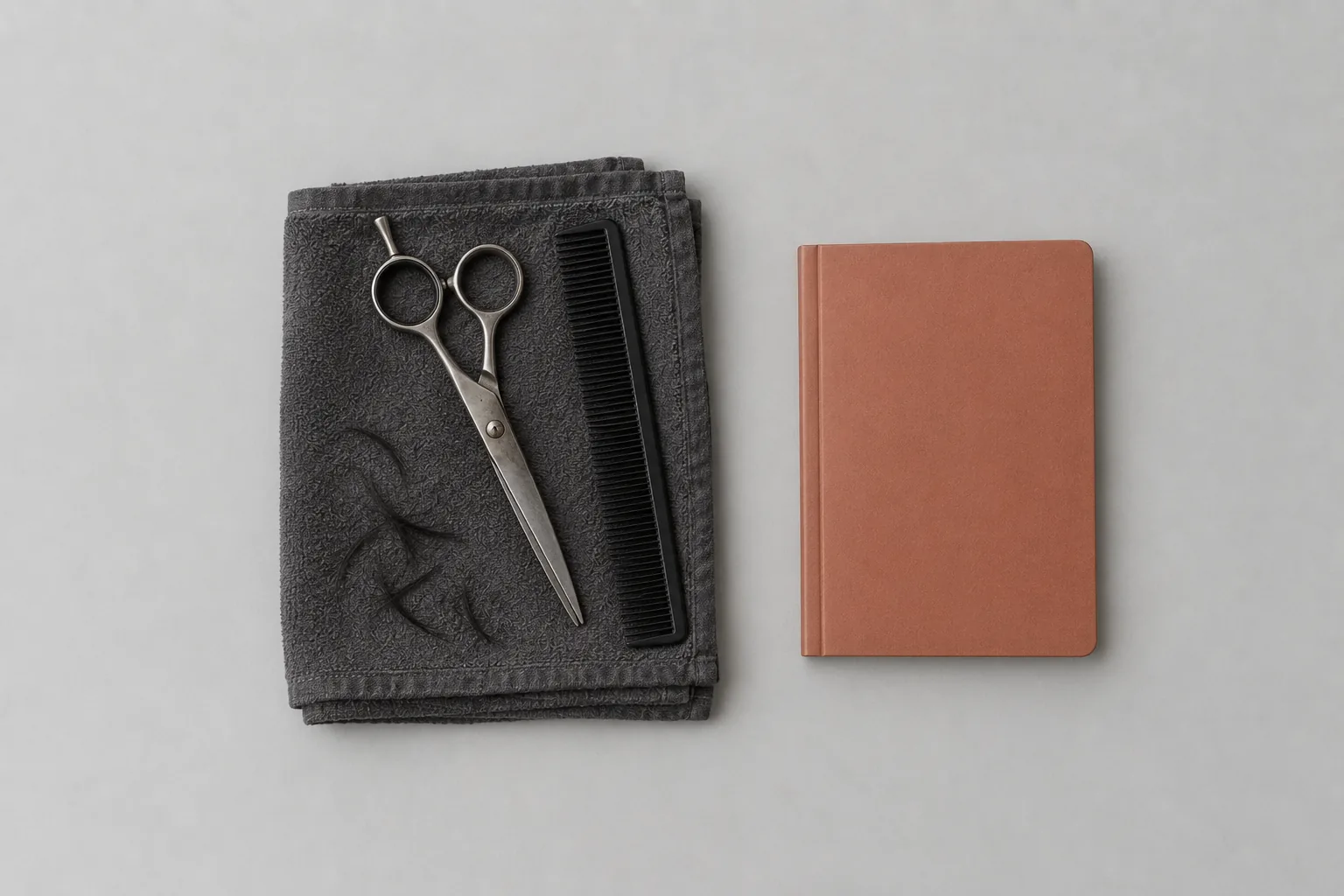
Here is what consistency bought me. I once took bad advice and went short. It did not suit me at all. But because my stylist had six years of my hair behind him, when I decided to grow it back to medium he knew roughly how long it would take and how many cuts it would need to get there in a shape I could stand. A stranger would have been guessing.
It is the same lesson I learned the hard way about switching products: the switching itself is the cost. And it rhymes with dressing in a way that did not suit me for years — looking wrong for your own face is rarely one dramatic decision, it is a series of small ones nobody was tracking.
I am going through this right now, for the dullest possible reason: my stylist is heading toward retirement, so I am starting again with somebody new. That is the honest cost of the approach. You still have to rebuild it eventually, and it is still worth building.
Where to start
If your hair situation is currently "shampoo and hope," here is the order I would go in.
- Add conditioner tonight. Cheapest, fastest, biggest difference of anything here, and it is the step almost everyone skips.
- Work out your actual wash frequency by skipping a day and looking, rather than copying a number off the internet. But wash out whatever you put in.
- If you have flakes, buy the anti-dandruff shampoo and use it two or three times a week for two weeks before judging it.
- Pick one stylist and stay. The third cut with somebody who knows your head beats the first cut anywhere else.
- Decide what you are actually willing to wear. Hairspray buys you a sharper shape and a worse day. Sea salt buys you a softer shape and a better one.
- Leave the rest alone. Thick hair punishes fussing more than it punishes neglect.
None of this is complicated, and none of it is new. It is the same shape as the three products I tell everyone to start with — a small number of ordinary things, done consistently, for long enough to tell whether they worked.
What I would tell twenty-two-year-old me
Not to buy anything. To wash it once instead of twice, put conditioner on it, and stop moving between stylists.
Thick hair is a head start. I spent nine years treating it like a problem that needed solving twice a day, and the fix turned out to be doing less and doing it in the same place. My friend Jason's new haircut landed the way it did because it confirmed a change rather than pretending to one — and that is the whole thing. Your hair is not a project. It is a thing you keep.
Filed under
One note on transparency: no brand mentioned on this site is sponsoring us, and we don’t use affiliate links. Everything we recommend is something we’ve personally used. Nothing here is medical advice. If any of that changes, you’ll hear it from us first.
Don't miss the next one
New articles straight to your inbox. No spam, no fluff — just what actually works.
Free. Unsubscribe anytime.