
I Washed Harder for Years. It Was the Wrong Lever.
Acne is not a dirtiness problem. The things with real evidence behind them are duller, cheaper, and nobody can sell them to you.

RayCo-Founder & Editor
The short version: Acne is not a dirtiness problem, and washing harder makes it worse — I spent years proving that on my own face. The things with real evidence behind them are dull: what you eat, how you sleep, and genetics you didn't pick. I should say up front that I have never had full-blown acne, only the occasional pimple, so this is an article about causes rather than a recovery story.
Before anything else: what I am not
I get pimples. I have never had acne.
That distinction matters and I'd rather put it in the first hundred words than have you find out later. I've never had the kind that covers a face, never had the kind that scars, never sat in a dermatologist's office. What I've had is the occasional spot, reliably, under two specific conditions I'll get to.
So if you're looking for someone who cleared severe acne and can tell you how, that isn't me, and I'd be suspicious of anyone who claims it casually. If your acne is painful, leaving marks, or has stopped responding to anything you try, this article is not the right level of help. See an actual doctor. That is not me being cautious for form's sake — it's the one piece of advice in here I'd insist on.
What I can do is tell you what actually causes it, because most of what I was told turned out to be wrong.
So what actually causes it?
Four things happening together, and none of them is dirt.
Your pores make oil. Dead skin cells don't clear out the way they should. The two combine and block the pore. Bacteria that already live on everyone's face multiply in that blocked pore, and your immune system reacts — and the redness and swelling you can see is that reaction, not the blockage itself.
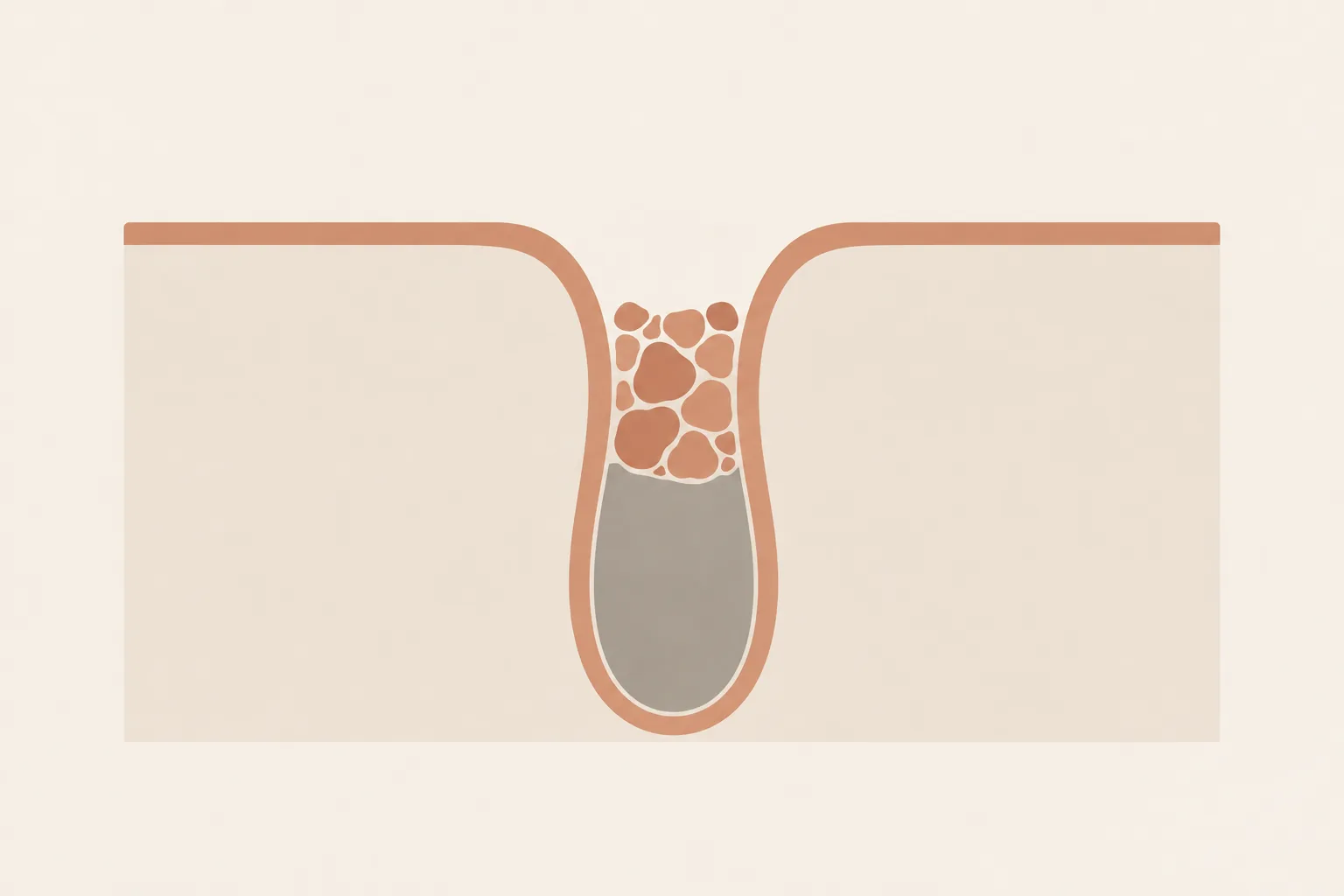
That's the whole mechanism, and notice what isn't in it. Nothing about being unwashed. Nothing about what you ate this morning. The things that make it more likely — how much oil you produce, how your skin sheds — are largely set by hormones and genetics, which is a deeply unsatisfying answer because you can't do anything about either.
Everything else in this article is a nudge on top of that. Real nudges, some of them. But nudges.
Is it because my face is dirty?
No. And I believed it was for years, which cost me.
My approach was to use the harshest face wash I could find and nothing else. No moisturizer, no thought about it — just something that left my face feeling stripped, because stripped felt like clean and clean felt like the point.
That was the wrong lever, and I was pulling it hard. Acne isn't dirt sitting on your face waiting to be scrubbed off. It's happening inside a pore, where your face wash isn't going. All the scrubbing does is damage the surface, which makes your skin produce more oil to compensate — the same trap I wrote about with oily skin.
I switched to a gentle gel cleanser and my skin got better, not worse. That still feels counterintuitive to type. The one I use is from Remedy — the brand founded by the dermatologist whose advice I've followed for years, which I mention because it's what's actually on my shelf and you should know the connection rather than find it out yourself. Nobody pays me and there are no affiliate links on this site. The cleanser article covers how to pick one.
If you take one thing from this piece: you cannot wash acne off. Washing twice a day is enough. A third wash is not extra credit.
Does what you eat matter?
Some, and this is where my own experience and the research point at slightly different things.
What I noticed: fried food in normal amounts does nothing to me. It's when I go past my own usual amount — a heavy stretch of it — that I get a pimple or two, and that happens every time. Reliably enough that I stopped treating it as coincidence.
What the research actually says is a bit different, and I want to be accurate rather than just validate myself. Greasy food is not an established acne trigger. What does have evidence behind it is high-glycemic food — the things that spike your blood sugar fast, like white bread, sugary drinks and processed snacks. Those raise insulin, which nudges oil production and inflammation up.
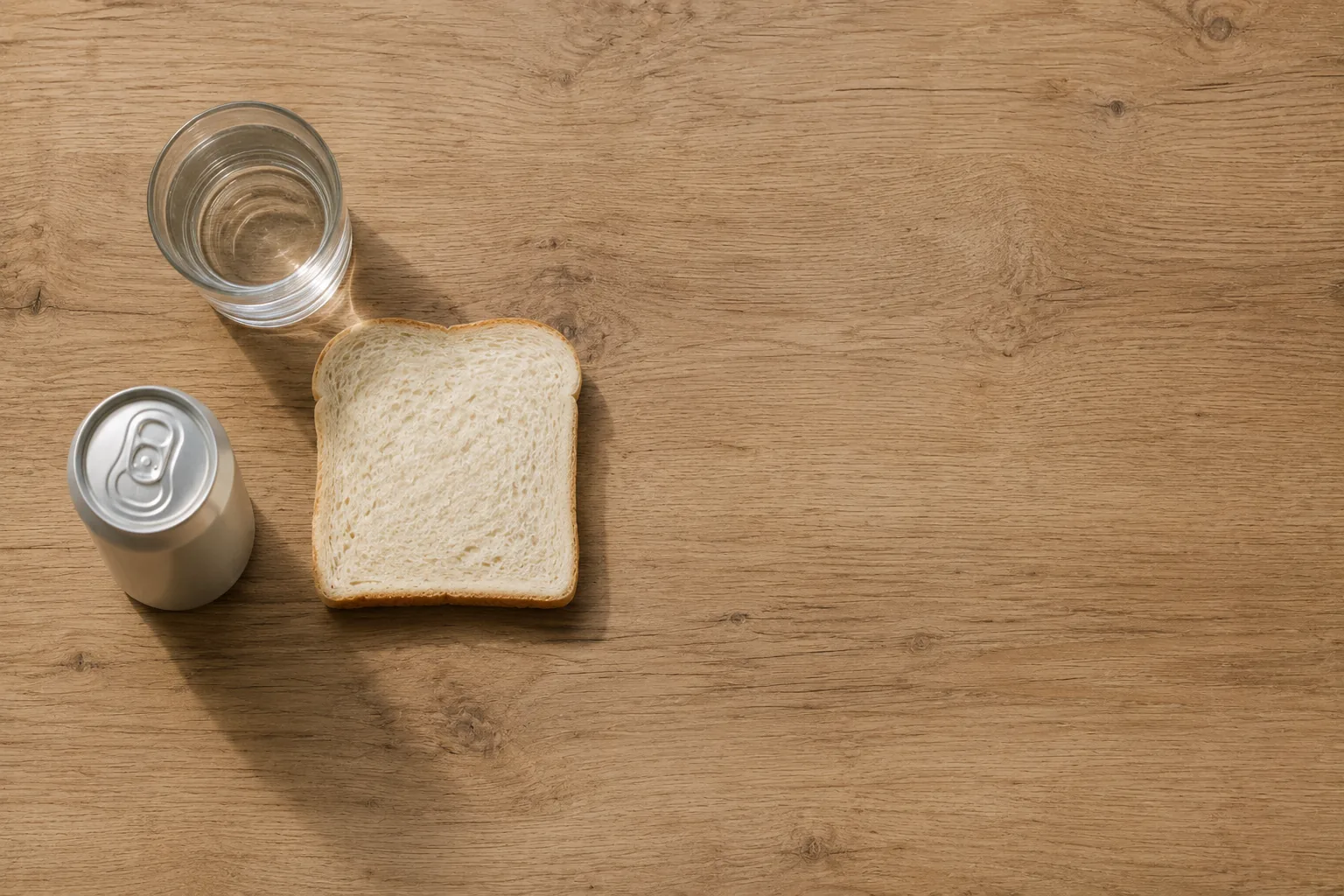
So the grease probably isn't what's doing it. A heavy fried-food stretch for me also means a lot of fast, processed, blood-sugar-spiking food all at once. The grease was traveling with the actual culprit.
On dairy: there's a modest link, and it's specifically skim milk and whey rather than dairy as a category. The evidence on cheese is genuinely mixed — some studies find a link, some don't. If you're going to change one thing, this is a smaller lever than the sugar one.
And chocolate is not settled, which surprised me. I had it filed as a myth. But small trials keep finding the opposite — including one that gave men pure cocoa with no sugar in it and counted more spots within a week. Other studies found only the sugary kind mattered. I can't tell you it's cleared.
None of this is a diet. It's "eat like an adult most of the time," which you already knew, and which has the advantage of being good for you regardless of what your face does.
What about sleep and stress?
This is my strongest pattern, and the evidence backs it more firmly than I expected.
For me it runs through sleep. When I get stressed my sleep quality falls apart, and when my sleep falls apart I break out. I don't think stress goes straight to my face — it goes to my sleep first, and the sleep does the damage.
The research supports the link, and it's a nastier loop than it first looks: poor sleep makes acne worse, and having acne makes people sleep worse. Studies have found people with worse sleep quality had objectively worse acne, and that markers of inflammation rise in people who are sleep deprived. It runs in both directions, which means it can pick up speed on its own.
That's the one causal chain in this article I'd actually act on, partly because it's free and partly because everything else in your life improves too. It's also the hardest, which is why nobody sells it.
Do pillowcases and towels actually matter?
A little, and much less than the internet insists.
I change my pillowcases and sheets weekly and my towels every three days. I have seen improvement — but it is almost entirely on my body, not my face. My back and shoulders responded clearly and consistently. My face barely registered it.
But I want to be straight about the evidence here, because this is where advice gets confidently oversold: there is no published research showing that dirty pillowcases cause acne. Dermatologists recommend changing them regularly, and that recommendation is sensible — less oil and debris against your face for eight hours is not a bad thing — but the direct evidence is thin.
So do it. It's cheap, it takes no effort, and clean sheets are pleasant regardless. Just don't expect it to be the thing that fixes anything, and don't feel you've found the answer when your skin improves the same week you changed four other things.
Which brings me to the real problem with all of this.
Why can't you tell what's working?
Because nobody changes one thing at a time, and I certainly didn't.
When people start taking care of their skin, they change everything at once — new cleanser, moisturizer, sunscreen, better sleep, better food, cleaner sheets. Then something improves and they credit whichever part they're most invested in.
I can't isolate what fixed what for me, and I'm not going to pretend otherwise. My honest answer is that it was the accumulation of all of it, which is a useless answer for anyone wanting to know which product to buy, and the true one.
If you genuinely want to know whether something works, change one thing and give it three months. Almost nobody does this, including me.
What about the stuff on my nose?
Mostly not acne, and worth separating out before you treat it as if it is.
Blackheads are technically a form of acne — a blocked pore, open at the surface. But the gray dots spread evenly across most noses usually aren't blackheads at all, and they have their own article because treating them as acne leads people to attack their own face for no reason.
And if what's bothering you is the mark left behind after a spot rather than the spot itself, that's a different problem with a different timeline — and it's the one that matters more for skin like ours.
What I'd actually tell you to do
- Stop washing harder. Twice a day, gently, as part of a routine that is only three products. This is the single most common mistake and the easiest to reverse.
- Fix your sleep before you fix your diet. It has the strongest evidence, it costs nothing, and for me it was the whole pattern.
- Cut the fast sugar first. White bread, sugary drinks and processed snacks have the strongest evidence behind them. Chocolate is less settled than I assumed — if you eat a lot of it, that's the one worth testing on yourself.
- Change your pillowcase weekly because it's easy, not because it's a treatment. The evidence is thin and honest people should say so.
- Change one thing at a time and wait three months. Otherwise you'll never know, and you'll keep paying for whichever product you happened to like.
- If it's painful, scarring, or not responding, see a doctor. An article is the wrong tool for that, and this one especially.
Most of what I believed about acne was about cleanliness, and it was wrong in a way that made me treat my own face badly for years. The things that actually moved the needle were sleeping properly and eating like I cared.
Neither of those is something anyone can sell you, which may be why nobody told me.
Filed under
One note on transparency: no brand mentioned on this site is sponsoring us, and we don’t use affiliate links. Everything we recommend is something we’ve personally used. Nothing here is medical advice. If any of that changes, you’ll hear it from us first.
Don't miss the next one
New articles straight to your inbox. No spam, no fluff — just what actually works.
Free. Unsubscribe anytime.