
Four Things I Stopped Buying. Only One Was a Mistake.
Three of them work fine. I was just buying them to do a job they were never going to do.

RayCo-Founder & Editor
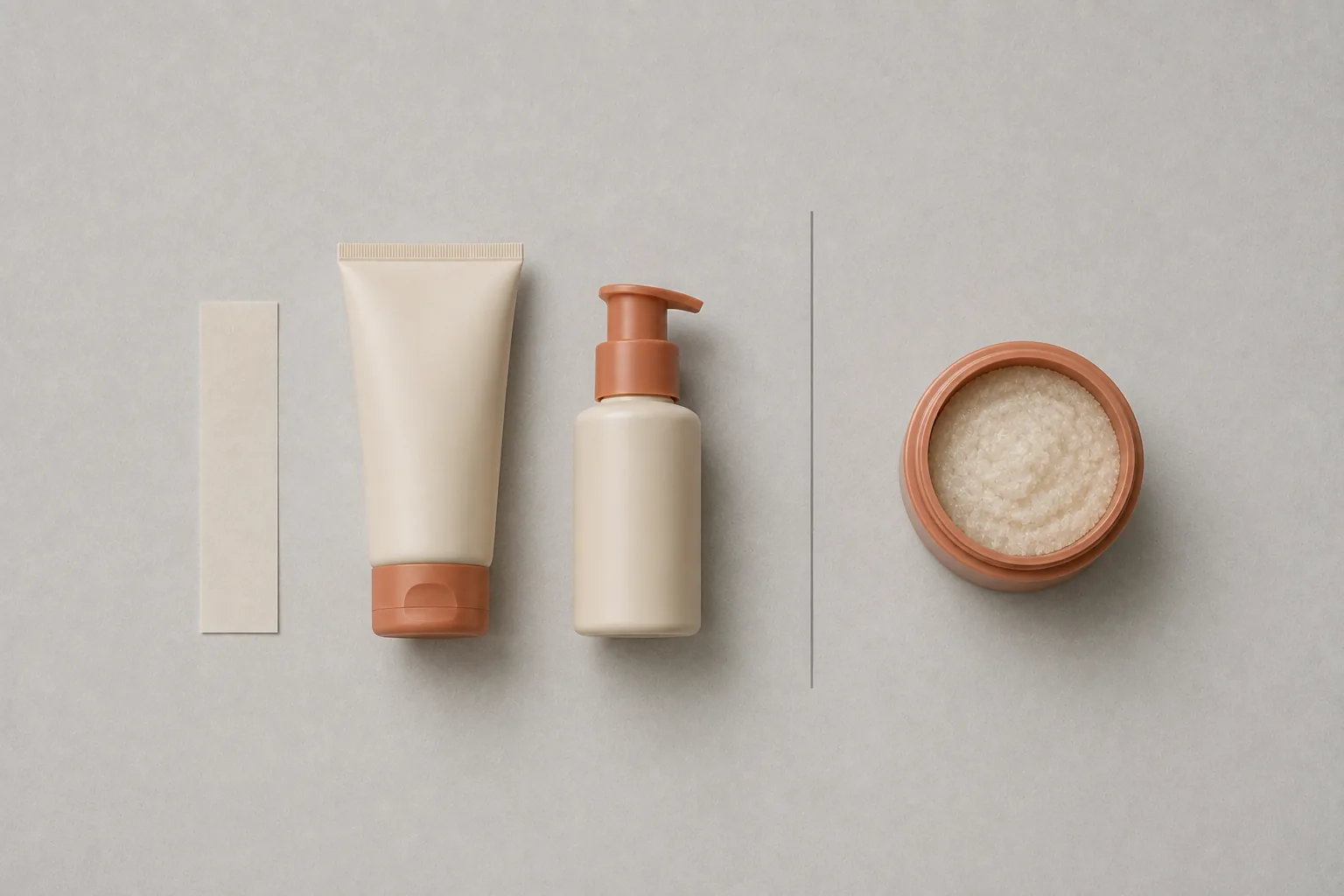
The short version: I stopped buying four things. Only one of them was actually a mistake — the other three do something, just not the thing I wanted them to do. That distinction turns out to matter more than any list of products, so this is less a hit list than an explanation of where four common purchases actually belong.
The distinction it took me years to make
Most skincare advice sorts products into "works" and "does not work." That is not the useful split.
The useful split is fix or tool. A fix changes the underlying situation. A tool does a specific job, right now, and then the situation goes back to what it was.
Three of the four things below are perfectly good tools. I was buying them as fixes, which is my error rather than theirs. The fourth was genuinely making my problem worse, and that is the only one I would tell you to stop buying outright.
1. Pore strips
These work, and that is exactly what makes them confusing.
You put one on, you pull it off, and there is visible evidence on the strip. Nothing about that is fake — it pulled material out of your pores, and you can see it.
Then the pore fills up again, because pores are not a problem you solve once. They are a thing your face does continuously. The strip did not change how much oil you produce or how quickly your skin sheds; it emptied something that immediately begins refilling.
I bought them for the pores on my nose, which is the single thing I have spent most of my skincare life trying to improve. They were marketed directly at my exact complaint. They did not move it, and a whole routine eventually did — the article on nose pores covers what those dots usually are, because most of them are not what people think.
So: a temporary cleaning tool, fine to use alongside a routine, useless as a substitute for one. If you enjoy using them, use them. Just do not expect the result to still be there next month, and do not let them be the only thing you are doing.
One point of confusion worth heading off: the brand I used for strips also makes a sunscreen I recommend elsewhere on this site. Those are two different products with two different jobs, and rating one says nothing about the other.
2. Harsh cleansers — the one actual mistake
This is the only thing on the list I would tell anyone to stop buying, and I used them for years.
I chose face washes by how stripped they left me. Tight, squeaky, slightly uncomfortable — that felt like clean, and clean felt like the point. Nivea Men and Neutrogena both did the job I was asking of them, which was to remove as much as possible.
The problem is what your skin does next. Strip it hard enough and often enough and it responds by producing more oil, not less. So the product I was buying to fix oily skin was, over a long enough run, one of the reasons my skin was oily.
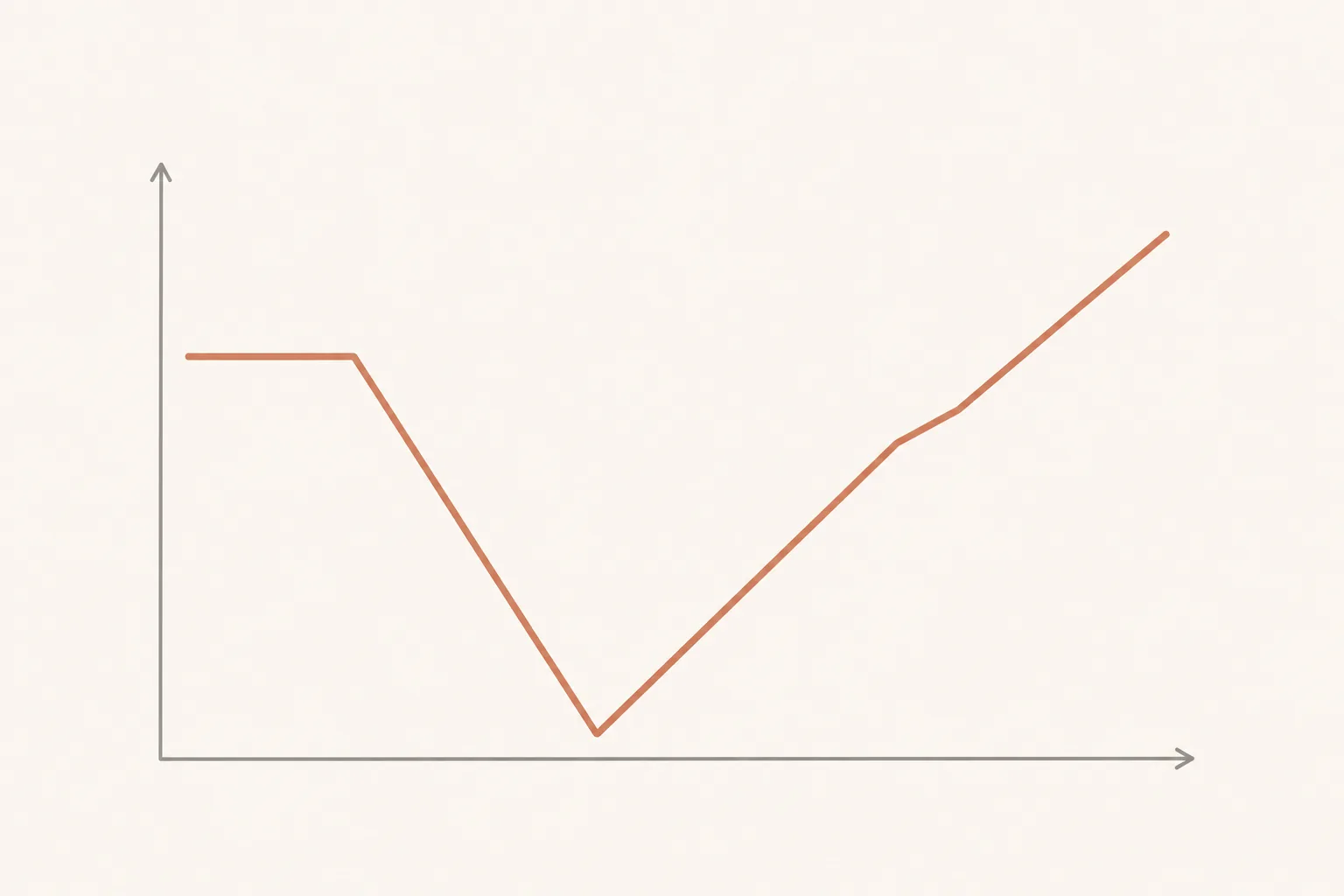
I have written about this from two directions already — why scrubbing harder makes oil worse, and the years I spent proving it on my own face — because it is the most expensive mistake in this article and it is the one nobody tells beginners.
Switching to a gentle gel cleanser made my skin better, not worse, which still feels counterintuitive to type. How to choose one.
3. A sunscreen with a white cast
I want to be careful here, because this one is purely preference and I am not calling it a bad product.
The sunscreen I stopped using was Derma Lab UV Reflect. It protects. It does the job it says it does. My objection is entirely cosmetic: it left a white cast on my face, and when I rubbed my skin a visible white dust came off. I did not like wearing it.
That sounds like a trivial complaint, and for most product categories it would be. For sunscreen it is not, for one reason:
A sunscreen you avoid wearing protects you exactly as much as no sunscreen at all. Which makes "do I actually like putting this on my face" a functional requirement rather than a vanity one. It is the only product I own where preference and effectiveness are the same question.
I did not wear sunscreen for years because I never burned and never thought about it, and a free in-store scan eventually showed me damage I could not see. Given that history, a sunscreen I find unpleasant is a sunscreen I will quietly stop using, and I know it.
So this is not "do not buy this." It is: test how it feels before you commit to a big bottle, and take your own reluctance seriously rather than trying to discipline your way past it.
4. Face scrubs
I used exfoliating scrubs for a while, Tiege Hanley's among them, and I saw no difference worth the step.
That is a personal result and I will not dress it up as a study. What I can tell you is what I replaced them with and why I think the swap was right.
I now use an exfoliating toner and, separately, retinol. Two things make me more confident in that pairing than in the scrubs:
- The gentler chemical approach has better clinical evidence behind it than physical scrubbing does, and physical scrubs carry a risk scrubs are rarely sold with — small tears in the skin surface, and the irritation that follows.
- Retinol is doing a different job entirely. It is not technically an exfoliant, whatever the marketing implies; it works on how quickly your skin turns over rather than loosening what is already on the surface. I wrote about starting it, with the caveat that I cannot isolate its effect.
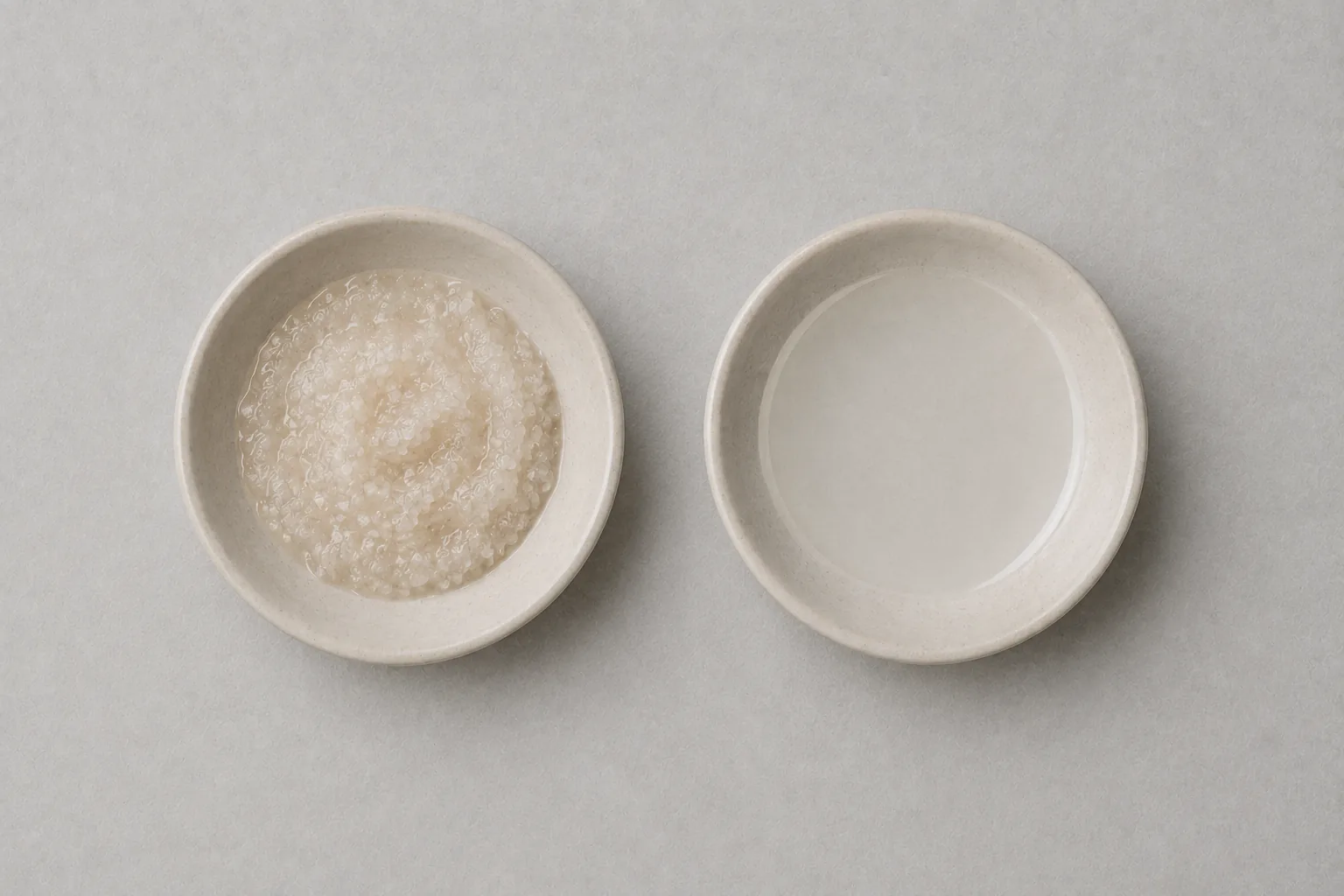
I alternate them rather than using both at once, which matters more than which one you pick. Stacking exfoliation on top of retinol is a reliable way to end up irritated, and an irritated face is the thing all four items in this article were supposed to help me avoid.
The cleansers article covers the scrub question in more detail.
How to tell which one you are buying
You can usually work this out in the shop, before you have spent anything.
Ask what happens if you stop. A fix leaves something behind when you quit — your skin is in a different state than before. A tool does not. Stop using pore strips and your nose is exactly where it was; stop wearing sunscreen for a year and you will be able to tell.
Ask how fast it promises to work. Anything advertising a visible result in minutes is describing a tool, because nothing that genuinely changes skin works that fast. That is not an accusation — it is just what the timescale tells you.
Ask whether it is aimed at your symptom or at your skin. The four things here were all sold directly against a complaint I had. The products that eventually helped were unglamorous ones that did not mention my nose at all.
None of that makes tools bad. It makes them a supplement to a routine rather than a replacement for one, which is a much cheaper thing to get wrong.
What to do instead
- Keep the tools, drop the expectations. Pore strips are fine. They are just not a plan.
- Stop buying cleansers by how stripped they leave you. That is the one purchase here that actively worked against me.
- Judge sunscreen partly on whether you enjoy wearing it. You will not wear one you dislike, and an unworn sunscreen protects nothing.
- If scrubs are doing nothing for you, a gentler exfoliant is the better swap — and alternate it with retinol rather than stacking them.
- Spend on the boring three first — cleanser, moisturizer, sunscreen. Everything in this article is something I bought instead of getting those right.
The pattern, now that I write them out together, is that I kept buying things aimed precisely at my complaint. Strips for pores. Scrubs for texture. Stripping cleansers for oil. Each one targeted the symptom directly, and the thing that eventually worked targeted nothing in particular — it was just the same unremarkable routine, run every day, for long enough to tell.
Only one of the four was a genuine mistake. But all four were me hoping a product would do what a habit does.
Filed under
One note on transparency: no brand mentioned on this site is sponsoring us, and we don’t use affiliate links. Everything we recommend is something we’ve personally used. Nothing here is medical advice. If any of that changes, you’ll hear it from us first.
Don't miss the next one
New articles straight to your inbox. No spam, no fluff — just what actually works.
Free. Unsubscribe anytime.