
I Stopped Switching. That Was the Whole Change.
Twelve months, one routine, two substitutions. What moved, what didn't, and what it cost.

RayCo-Founder & Editor
The short version: I have used the same routine, in the same order, since September 2025. I did not buy my way here — the products barely changed. What changed was that I stopped changing my mind. Twelve months on, my oil is down a lot, my nose pores look smaller, my skin is smoother and brighter, and one thing did not move at all.
The month nothing new happened
September 2025 is not when I started taking care of my skin. It is when I stopped experimenting.
I had been running some kind of routine for years before that. What I had not been doing was running the same one. I switched products every six weeks or so, chasing the same two complaints — oil, and the pores on my nose — and every switch reset the clock on knowing whether anything worked.
The change that produced everything below was not a purchase. From September 2025 the moisturizer stayed the same. The serum stayed the same. The toner stayed the same. The order I applied them in stayed the same. Only two things moved in twelve months: I changed sunscreen, and I changed cleanser.
That is the entire experiment. One year, one routine, two substitutions.
What my face was actually doing at the start
Rougher than it is now, and much more easily upset.
The texture was slightly worse — not dramatic, but I could feel it. The bigger problem was sensitivity. My skin reacted to things it does not react to now, and it was permanently tight and dried out after washing, because I was using cleansers chosen for how aggressively they stripped my face.
I thought that tightness was the product working. It was the product doing damage, and I have written about that mistake at length because it cost me years.
The oil: the biggest change by a distance
This is the one anybody who knows me would notice.
My skin is oily. Not "gets a bit shiny" oily — an oil-blotting sheet used to go completely transparent in two swipes, and my face would be visibly shining by early afternoon. T-zone, cheeks, the area below my lower lip.
That is largely gone. Not eliminated — I still have oily skin, and I will always have oily skin — but my face does not shine any more, and a blotting sheet no longer disappears on contact.
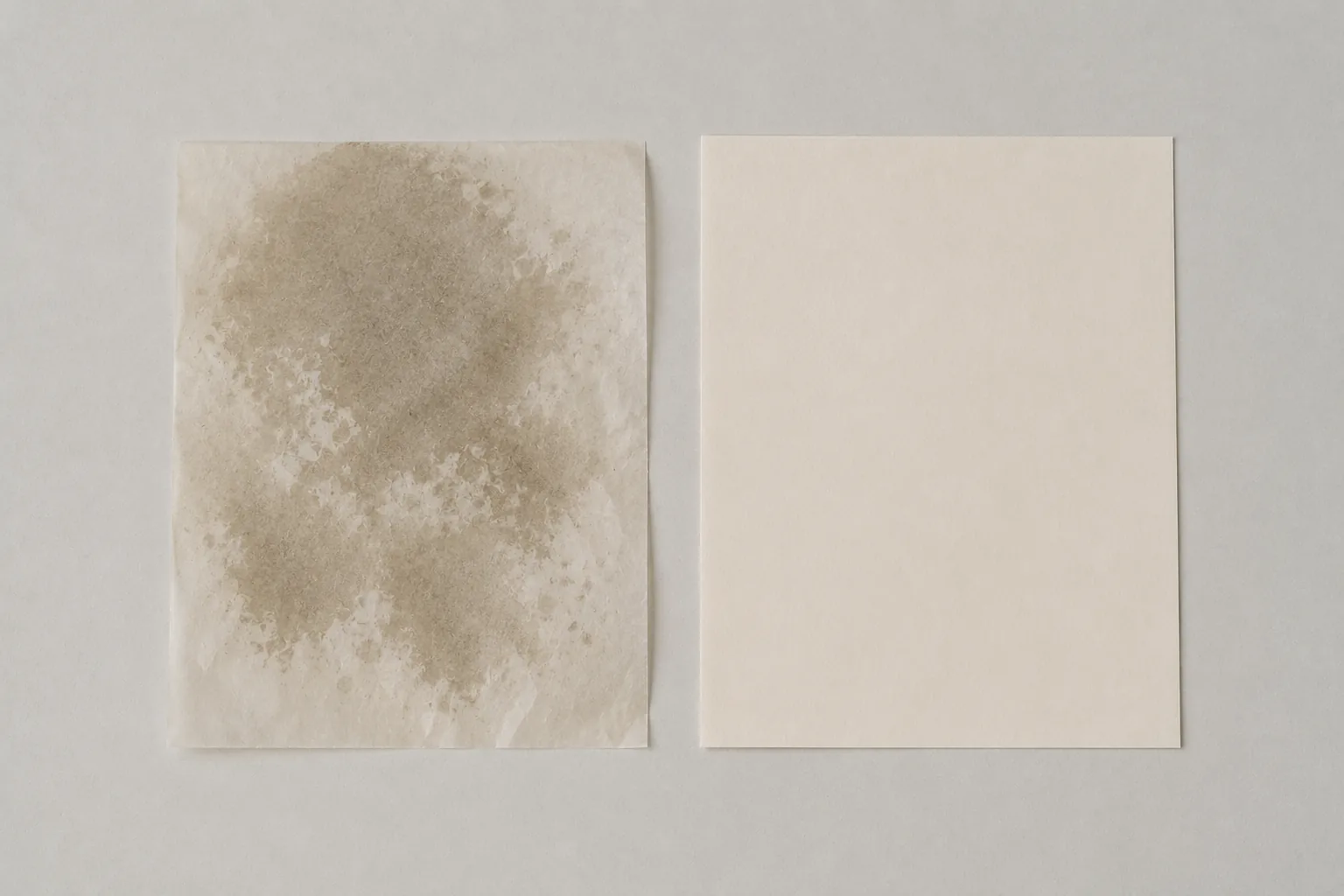
I cannot tell you which product did it, and I am suspicious of anyone in my position who says they can. What I can tell you is that the thing most likely to have helped is the thing I stopped doing: attacking my face with harsh cleansers, which makes oily skin worse rather than better.
The pores: smaller in appearance, and I want to be precise about that
They look better. They are not smaller.
Pore size is structural. It is set by genetics and it does not permanently change, and anything promising otherwise is selling you something. What does change is how visible they are — and the main reason pores look enlarged in the first place is oil, and the repeated congestion that comes with it.
Which means this is probably not a second result. It is the first one again. Less oil, less congestion, pores that read as smaller without being smaller.
I use a pore serum and I use retinol, and I am not going to credit either of them, for a reason worth stating plainly: the serum ran for roughly six months on its own before the retinol joined it. It had a head start, and my whole routine points at the same problem, so I have no way to separate them. I wrote the retinol article with that same caveat, and I am not going to quietly drop it now that the result is flattering.
Texture and brightness, which I trust least
Smoother, and brighter. I believe both, and I can prove neither.
The texture claim I am fairly confident about, because it is something I can feel rather than something I look for. My skin was slightly rough a year ago and it is not now.
Brightness is the one I would push back on if someone else said it. There is no measurement behind it. I have no before photograph to compare against, I am the person most invested in seeing an improvement, and "brighter" is exactly the kind of word that sounds like a result while meaning almost nothing. I am including it because it is what I would say if you asked me, and leaving it out would be its own kind of dishonesty. Treat it as the softest thing in this article.
The thing that did not move
Dark marks heal at exactly the same speed they always did.
When I get a spot, the mark it leaves takes about two weeks to clear. That was true before September 2025 and it is true now. Twelve months of consistency did nothing to it.
I think that is because there was no room for it to improve. Two weeks is already unusually fast — published timelines for post-acne marks run from months to well over a year, and mine was already at the quick end before I did anything. You should not read my two weeks as a target, and you should certainly not read it as what a routine buys you. It is how my skin happens to work, and it is the single most misleading thing about my face.
The useful version of this finding is the boring one: not everything responds. If you go twelve months and one specific thing is unchanged, that is a real result, not a sign you have failed.
The setback I caused myself
The worst stretch my skin has had was not an accident of biology. I did it.
Harsh cleansers, no sunscreen, for a long time. Each of those is a bad idea on its own; together they compound. Stripping your skin repeatedly leaves it dry, red, stinging and reactive — and then going outside with nothing on top of that asks a face that is already irritated to cope with more.
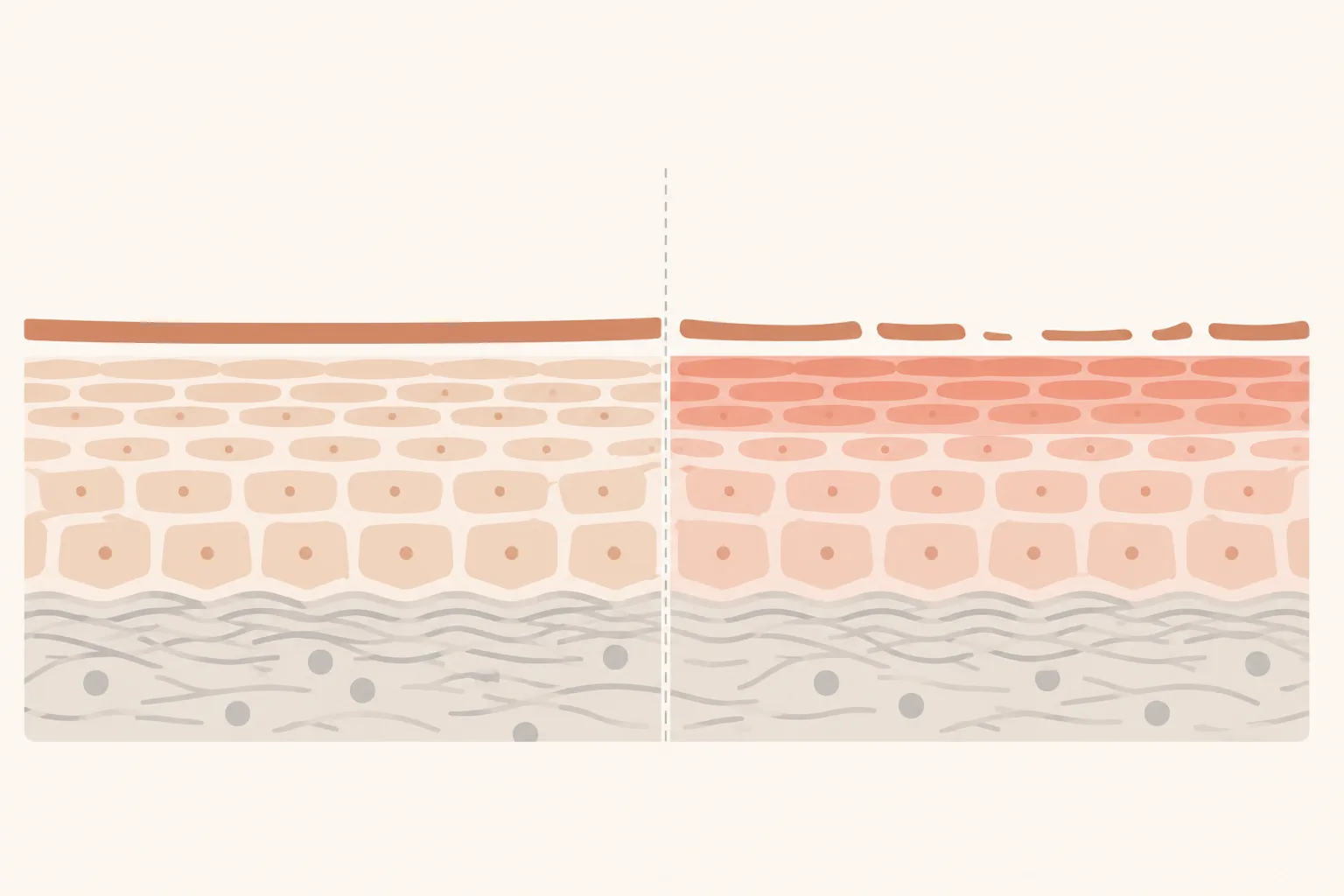
My face went red far too easily, and I did not connect it to anything I was doing. I assumed my skin was just like that. It was not — it was stripped, and it was unprotected, and I had arranged both of those things myself.
I never burned, which is why I never worried, and a free in-store skin scan eventually showed damage under the surface I could not see. That was the argument that actually landed.
What the year cost
Roughly nine hundred dollars, or about seventy-five a month, where I live. Most of these products cost more in the US, so your number would be higher.
I want to be careful about what that figure does and does not mean.
It is not what I would tell you to spend. My routine has grown well past what I actually recommend — cleanser, moisturizer, sunscreen, the three products that are still the whole answer for anyone starting. Those three are a fraction of nine hundred dollars a year. Everything on top is me chasing one specific complaint about my nose, and I am not going to dress that up as a general recommendation.
It is also an estimate rather than an accounting. I know what things cost and roughly how long they last. I did not keep receipts for twelve months.
And the money I actually wasted is not in that number. The harsh cleansers were cheap. They were the least expensive part of any year I have had, and they were the only thing in twelve months that actively set me back. Spending badly is not the same as spending a lot.
What I would tell myself in September 2025
- Stop switching. The switching was the mistake, not the products. You cannot evaluate anything you replace every six weeks.
- Bin the harsh cleansers immediately. They were the most damaging thing in the routine, and they were doing the opposite of what I bought them for. How to choose one that isn't.
- Wear sunscreen before you buy anything else. Not burning is not the same as not being damaged.
- Expect one thing not to respond. Mine was dark marks. Yours will be something. It is not a failure.
- Do not expect a purchase to do what consistency does. Nothing I added in twelve months mattered as much as the fact that I stopped changing my mind.
Twelve months, and the honest summary is that the biggest lever was free. I stopped doing something harmful, and I kept doing the same unremarkable things every day.
That is a genuinely annoying conclusion. It is much easier to sell a bottle than a year of not fidgeting, which is probably why nobody frames it that way.
Filed under
One note on transparency: no brand mentioned on this site is sponsoring us, and we don’t use affiliate links. Everything we recommend is something we’ve personally used. Nothing here is medical advice. If any of that changes, you’ll hear it from us first.
Don't miss the next one
New articles straight to your inbox. No spam, no fluff — just what actually works.
Free. Unsubscribe anytime.