
I Dressed Down to Seem Less Intimidating. It Backfired.
Casual clothes softened how I came across — and replaced it with something worse. Dressing up did the opposite of what I expected.

RayCo-Founder & Editor
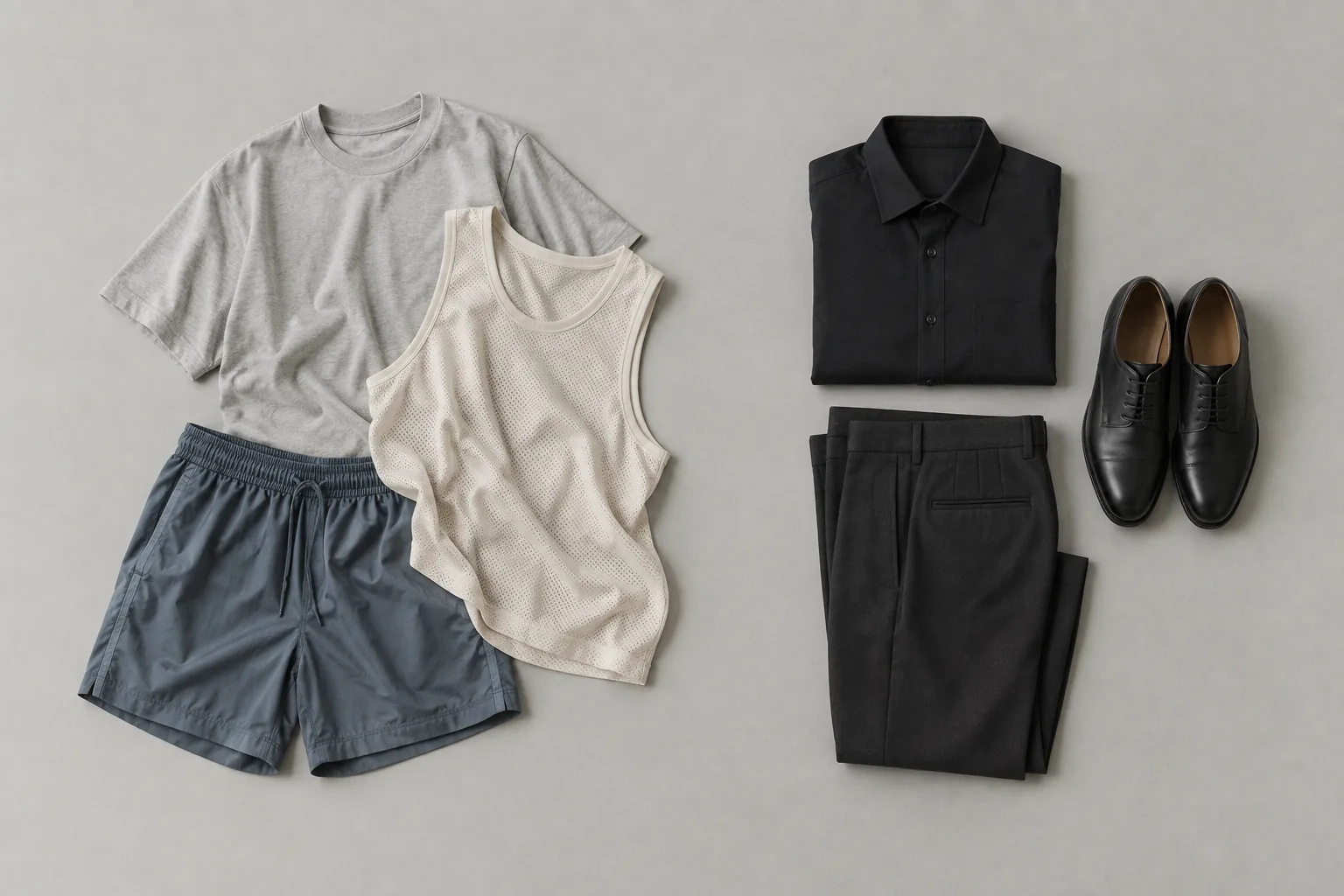
The short version: For years I dressed in shorts, sports tees and jerseys, on purpose, to seem less intimidating. It worked. It also swapped one impression I did not want for a worse one — that I did not care how I came across. When I started dressing better instead, the thing I expected did not happen. People did not get warier. They got nicer, and they took me more seriously. If your aura reads one way, dressing against it rarely fixes that. Dressing a level up usually does more.
The years I spent dressing down on purpose
I have been told I read as intimidating for most of my adult life.
I wrote recently about the personality side of that — how I spent years deliberately softening myself in conversation to offset an impression I could never confirm. What I did not say there is that I was running the same correction through my clothes.
Shorts, sports tees and jerseys, almost all the time. The logic was simple. If my face and manner came across as hard, I would dress like someone who could not possibly be taken for a threat. Loose, casual, sporty, relaxed. Nothing sharp anywhere.
So I was compensating on two channels at once. A softer manner, and a wardrobe designed to look harmless.
It worked, which turned out to be the problem
Here is the uncomfortable part: the clothes did their job.
People did read me as less intimidating. Dressing like I was on my way to the gym every day of my life took the edge off, exactly as intended.
But it put something worse in its place. Dressed that way all the time, I did not look approachable so much as I looked like I did not care. Not about my appearance, and by extension not about how I presented myself to anyone — at work, meeting people, anywhere it mattered.
That is a much worse impression to give than "a bit intimidating." Intimidating at least implies someone who takes himself seriously. Careless implies the opposite, and it is the one that quietly costs you — in how seriously your work is taken, in whether people assume you will follow through.
I had fixed one reading of me by trading it for a more expensive one.
You were going to be judged anyway
This is the part that changed how I thought about all of it.
As a working adult, most of the people who form an impression of you are people you will never get close to. A colleague in another department. Someone across a table once. A person you deal with for ten minutes. None of them are going to spend enough time with you to find out the first read was wrong.
And they will judge you regardless. If I read as intimidating, then plenty of those people are going to find me intimidating whether I dress in a jersey or not. I cannot opt out of being judged. Nobody can.
So the real choice was never whether to be judged. It was what to be judged as.
Once I saw it that way, dressing down stopped making sense. I was accepting "careless" as the price of slightly reducing "intimidating" — for an audience that was going to decide something about me in seconds either way. That is a bad trade even before you notice the second impression is worse than the first.
What happened when I dressed up instead
I switched last year. It was tied to getting fitter at the same time — once I had put that work in, I wanted to actually present it properly rather than bury it under sportswear.
I started dressing nicer. Sharper, more classic, more deliberate.
I expected that to make the intimidating read worse. If anything was going to make me look harder, surely it was dressing more seriously.
The opposite happened. People treated me nicer. Noticeably so. And they took me more seriously, which I had expected, but the nicer part surprised me.
My best explanation is that "intimidating and careless" is an unsettling combination, and "intimidating and well put together" is not. The second reads as someone composed and in control of himself. The first reads as someone who might be anything.
And the other half is simpler: when I know I look good, I feel good. I carry myself differently. I am not quietly aware that I look like I rolled out of bed. Some of what people were responding to was probably not the clothes at all, but the person wearing them feeling like himself.
The study everyone quotes, and what is left of it
If you read about dressing well for long enough, you will run into something called enclothed cognition — the idea that what you wear changes how you think and act.
The famous version is a 2012 experiment where people wearing a lab coat made fewer errors on an attention test. It got enormous coverage, and it is the thing most articles on this topic cite.
It did not replicate. A careful later attempt found no difference, and the original authors acknowledged that it cast doubt on that specific result.
That is not the whole story, though. A later review pulling together over a hundred effects from forty studies flagged the early work as shaky, but still found support for the broader idea that clothing affects how people think, feel and behave.
So the honest summary: the headline experiment fell over, and the general principle survived it. Which means my own experience here is about as good as the evidence gets — and my experience is that I behave differently when I am dressed well, and people respond to that.
Match your aura, don't fight it
"Dress to match your vibe" gets thrown around a lot online, usually without much meaning attached. Here is the version I actually believe.
Everyone gives off something before they say a word. Some people read as warm, some as serious, some as intense, some as easygoing. You mostly do not choose it, and you cannot fully change it.
What you can do is either work with it or against it.
Dressing against your aura is what I did for years — putting soft, careless clothes on someone who reads as hard. The result is a mismatch, and a mismatch reads as off. People sense that the presentation does not fit the person, even if they could not tell you why.
Dressing with it means leaning into what you already give off and presenting it well. I read as intimidating, so I stopped trying to disguise it and started making it look composed instead of careless.
That is not about looking like everyone else, and it is not about chasing some ideal of attractiveness. It is about your clothes and your aura saying the same thing.
If you want to be taken more seriously
This is the advice I would give almost any man, whatever his aura is.
Start dressing more seriously. Dress like you want to be above the occasion, not level with it.
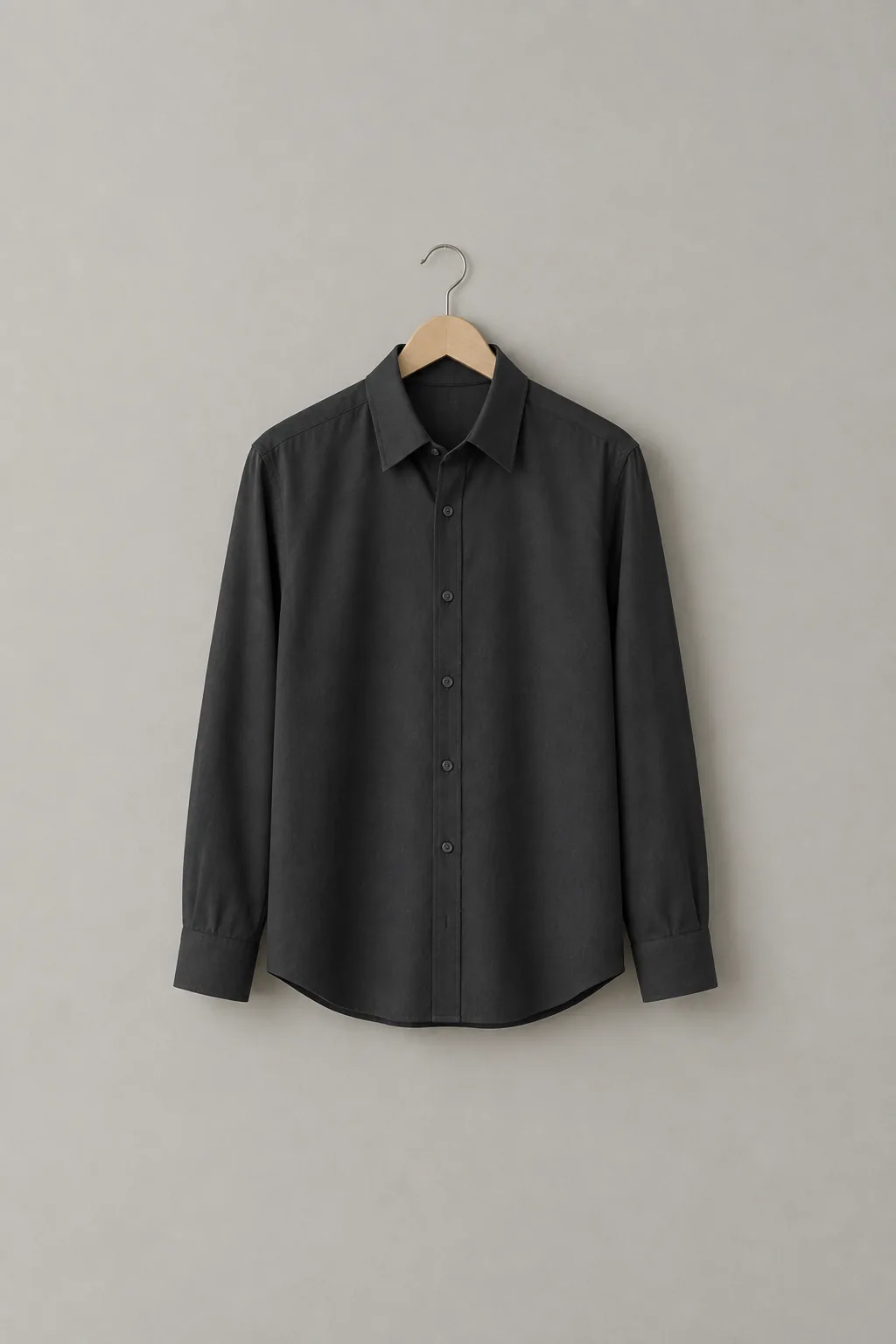
If you read as soft or easy to overlook, dressing a level up adds weight you do not otherwise have. If you read as intimidating, it swaps careless for composed. Either way it moves you in the right direction, which is why I think it is the rare piece of style advice that works for almost everyone.
What "a level up" means is simpler than it sounds. As general guidance rather than a prescription:
- Something with a collar rather than a printed tee most of the time.
- Trousers rather than shorts anywhere it might matter.
- Plain and dark over loud logos and sports branding. Branding says leisure; plain says intent.
- Fit before price. Something inexpensive that fits you properly reads better than something expensive that does not.
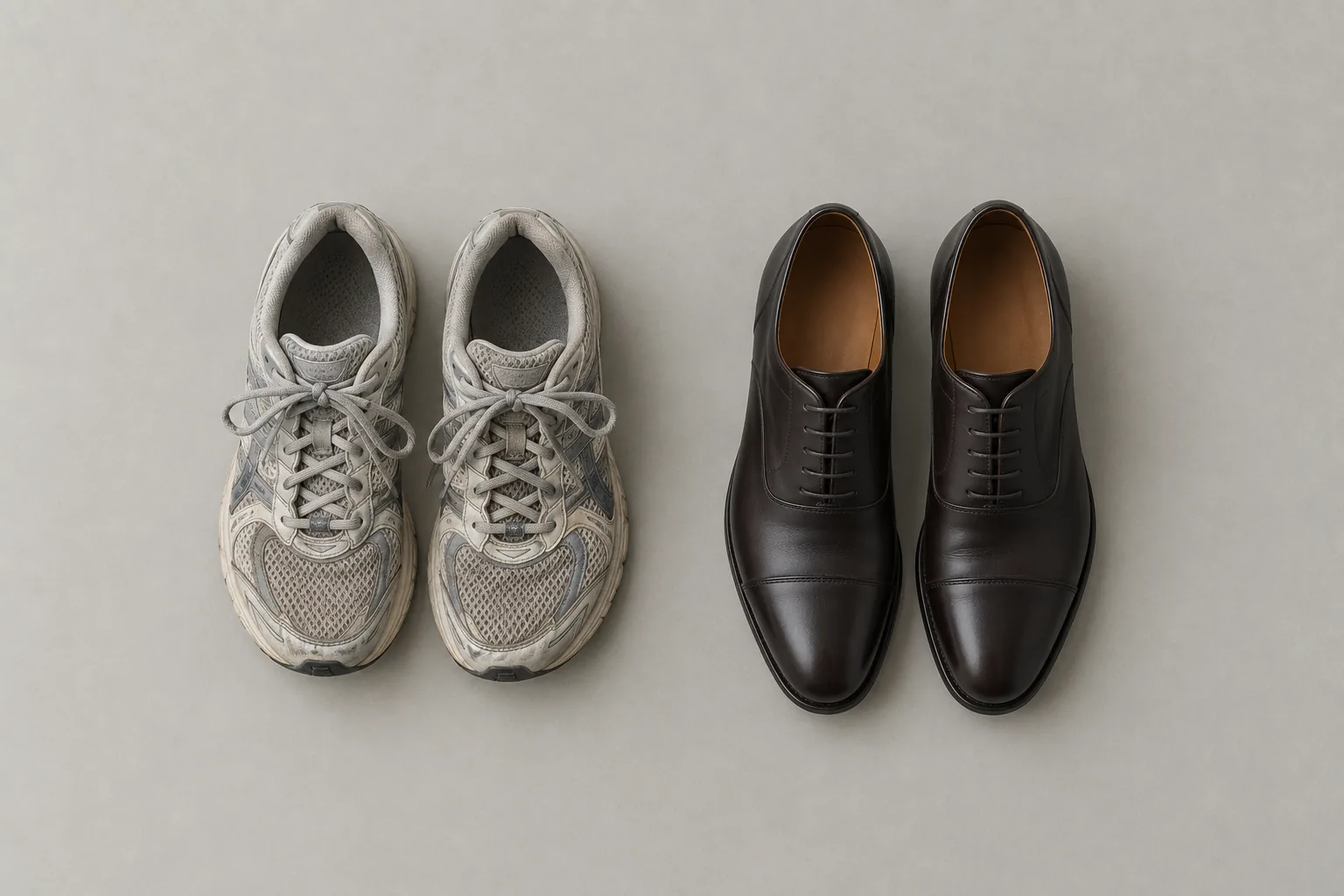
- Shoes you would not wear to the gym.
None of that requires money you do not have. Most of it is about taking one step up from whatever you would otherwise have reached for.
The same logic runs through the job-interview version of this, where appearance ends up doing work nobody admits it is doing.
What I would actually tell you
- Stop dressing against your aura. If you read one way, disguising it usually creates a worse impression than the one you were hiding.
- Accept that you will be judged either way. You cannot opt out. Decide what you would rather be judged as.
- Dress a level up. It adds weight if you lack it and adds composure if you have too much edge. Very few men are hurt by it.
- Notice how you feel in it. That is most of the effect, and the part no study can measure for you.
- Start with the basics you already control. The same applies to your face — looking after yourself is a signal people read long before they read the clothes.
I spent years dressed like someone who did not care, to seem less intimidating to people who were never going to get to know me. Dressing well did not make me more intimidating. It made me look like I meant it.
Filed under
One note on transparency: no brand mentioned on this site is sponsoring us, and we don’t use affiliate links. Everything we recommend is something we’ve personally used. Nothing here is medical advice. If any of that changes, you’ll hear it from us first.
Don't miss the next one
New articles straight to your inbox. No spam, no fluff — just what actually works.
Free. Unsubscribe anytime.