
My Friend Lost Twenty Kilos. Then People Changed.
Jason spent ten years letting himself go, then took twenty kilos off in eighteen months. The part nobody prepares you for came after.

RayCo-Founder & Editor
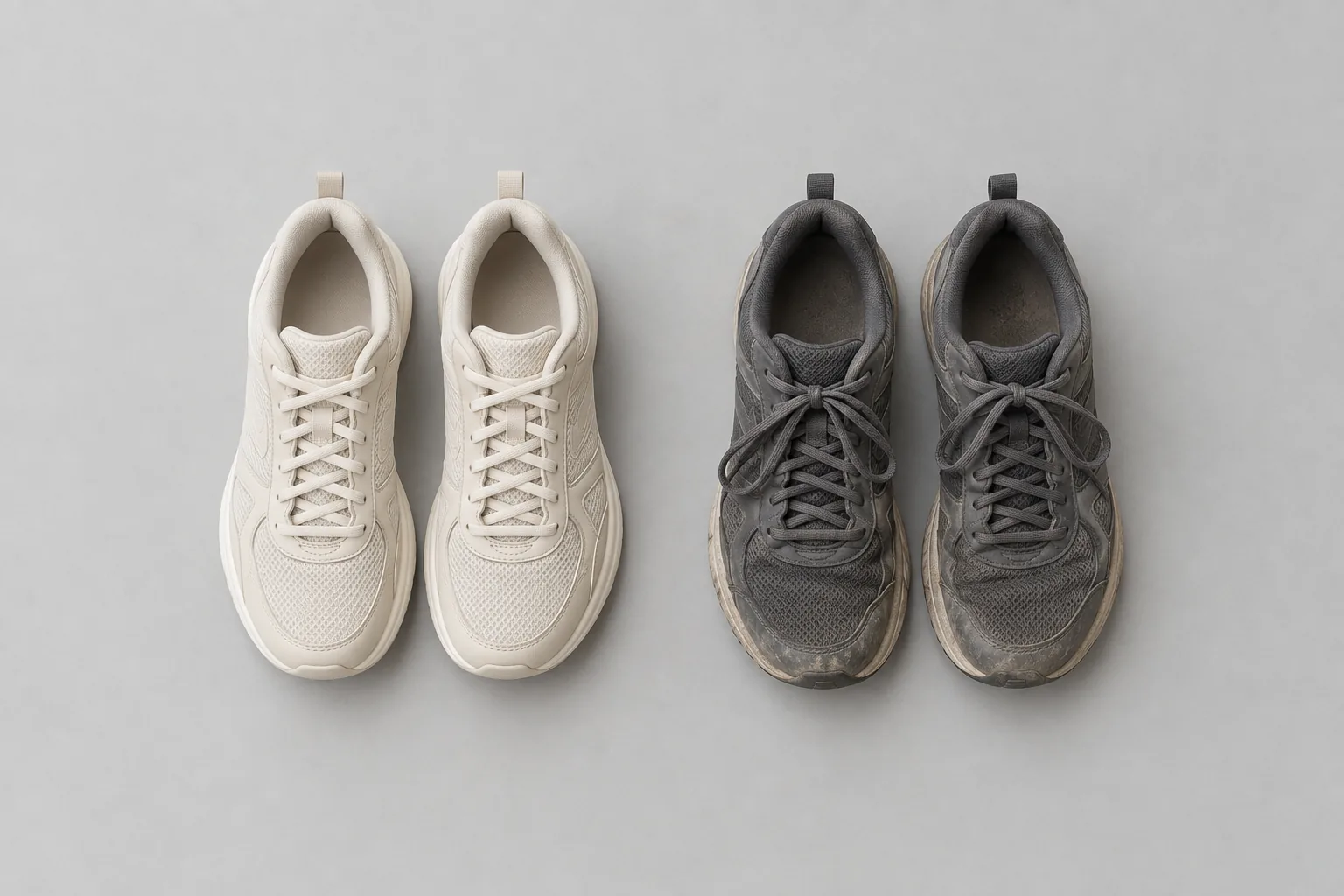
The short version: This one is about my friend Jason, and it is for him. He is my age. He spent about ten years letting himself go, got to roughly ninety-five kilos at five foot seven, and then over the last year and a half took twenty of it off and started running half marathons. What happened next is the part nobody prepares you for: people began treating him differently. Below is what he actually did, and the strange thing that arrives once it works.
Ten years is a long time to drift
Nothing dramatic happened to Jason. That is worth saying first, because the version of this story people expect involves a crisis.
There was no health scare and no moment of humiliation. He just stopped paying attention, for about a decade, the way it is very easy to do between twenty and thirty when nothing is forcing you to look. The weight arrived slowly enough that no single week was alarming.
He got to around ninety-five kilos — a little over two hundred pounds — at five foot seven. That is a lot of weight on a short frame, and it was not the kind anyone would describe as solid.
I am not going to soften that, because he does not. It is the starting point, and the reason the rest is worth reading.
The method was simple. The doing was not.
This is the part people are always disappointed by, and then underestimate.
He started going to the gym. Then he kept going. At some point he started running, and the running turned into half marathons, which is a genuinely absurd sentence to write about someone who a year and a half ago was not running at all.
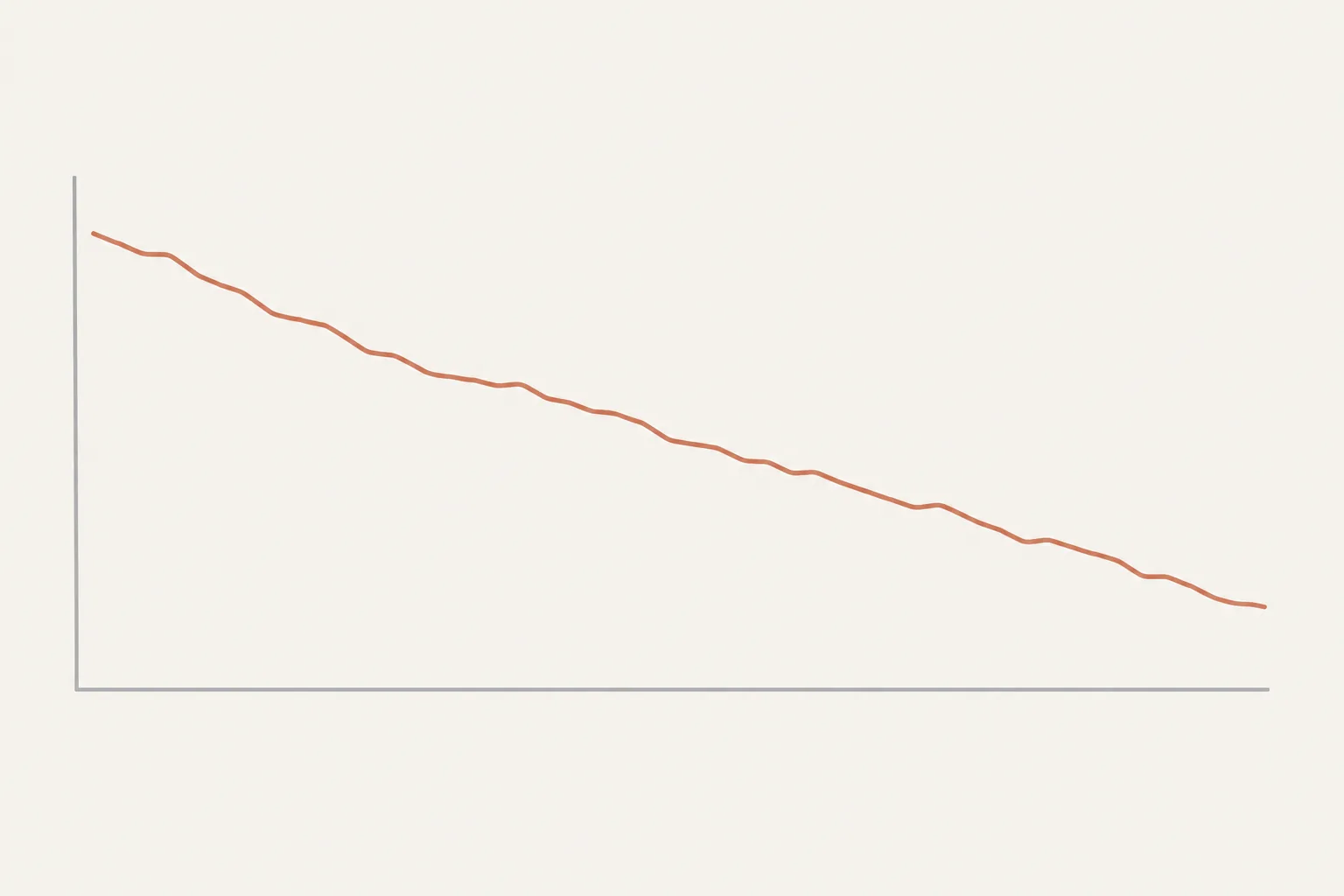
He is now around seventy-five kilos — roughly a hundred and sixty-five pounds. Twenty kilos down, over about eighteen months.
Run the arithmetic and it is barely a kilo a month. That is the whole trick. It is slow enough that no individual month looks like anything, and fast enough that eighteen of them are unrecognizable. It is exactly the pattern I found with push-ups and the same one that applies to starting anything at all.
There is no supplement in this story. There is no program I can sell you. He went, repeatedly, for long enough.
But simple is not the same as easy, and I want to be careful not to flatten what he did.
Eighteen months is a long time to keep showing up when nothing is forcing you to. There was no deadline, no coach waiting on him, no crisis making it urgent. Every single session was one he could have skipped with no consequence that day, and he did not skip them. That is the entire difficulty, and no method removes it.
The running makes the point better than I can. Going from not running at all to finishing half marathons is not something that happens to you. It is not a side effect of eating better or of turning up at a gym a few times. You get there by training when you would rather not, week after week, for months, and by being bad at it in public for a while first.
That is work ethic, and it is the only part of this story that cannot be copied. The method is free and I have just given it to you. The showing up is what he actually did.
Then he started dressing for the body he had
Here is the bit I find most interesting, because it came second rather than first.
For years Jason wore anime graphic tees and shorts. That was the uniform, and it made sense for the body he had — loose, forgiving, not asking to be looked at.
Once the body changed, the clothes stopped making sense. He moved to jeans and polo shirts that actually fit him. Not expensive, not fashionable in any particular direction. Just clothes cut for the person now wearing them.
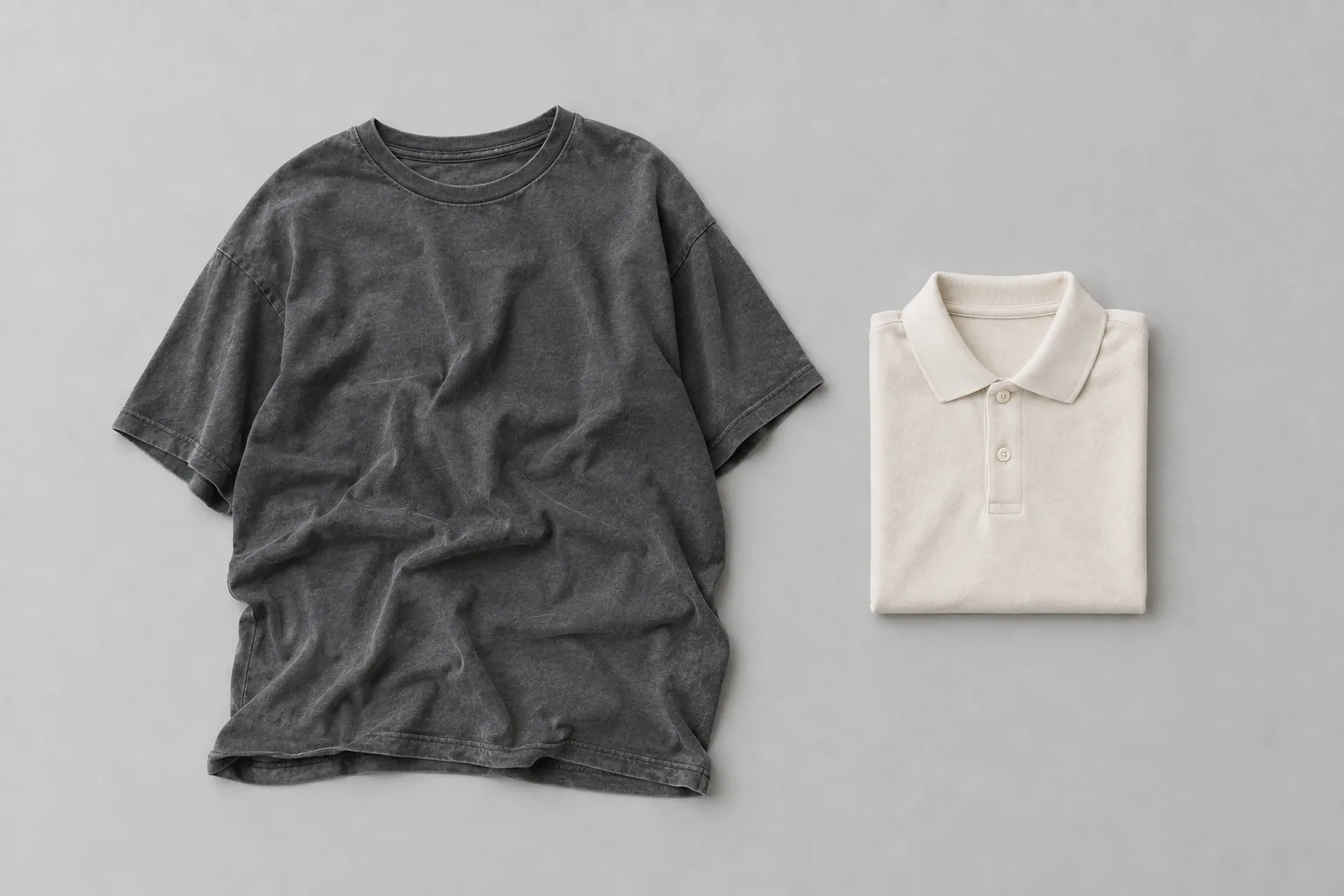
That order matters. He did not dress better to feel better about how he looked. He dressed better because the old wardrobe no longer fit the new shape, which is the least glamorous reason to update a wardrobe and probably the most reliable one.
He also changed his hair. It is fuller on top now and swept up and back rather than sitting flat, which gives his face structure it did not have before. Paired with round wire-frame glasses and a jaw that is actually visible, it reads as deliberate — like someone who thought about it rather than someone who let a barber decide.
And then people changed
This is the part he did not ask for and could not have prepared for.
Women who previously would not give him the time of day now approach him. The same people, in some cases. Not politely tolerating him — actively willing to give him a chance.
It is not only romantic, either. People are generally warmer. More patient. More interested in what he has to say.
Nothing about Jason's personality changed in eighteen months. He is the same person, with the same jokes and the same opinions. The only variable that moved was the outside.
It is not in your head, and that is the problem
If you have been through some version of this, you will have wondered whether you are imagining it. You are not.
There is a well-documented bias here. People rated as more attractive are also assumed to be more confident, more intelligent, more responsible, more trustworthy and more emotionally stable. This turns up across cultures rather than in one place, and it has real consequences — in who gets hired, who gets promoted, and what people are paid.
So the warmth Jason is getting is real, measurable, and was always going to arrive once he changed. It was sitting there the whole time, waiting for him to qualify.
That is a genuinely uncomfortable thing to learn about the people around you.
The part I cannot tell you
I want to be straight about the limits of this article.
I can tell you what it looks like from beside him. I cannot tell you how it feels from inside it, because I am not the one it happened to, and I am not going to put words in his mouth about something that personal.
What I can say is that there is an obvious trap here, and it is worth naming before you walk into it.
When people start treating you better for no reason other than that you look better, there are two conclusions available. The first is that everyone is shallow and none of it means anything. The second is that you were always worth this and the world finally caught up.
Both of those are corrosive, and I have watched people land on each of them.
The version I would argue for is duller. People are running a shortcut, mostly without noticing they are doing it. That shortcut is unfair and it is also not personal — the same bias was working against you before and is working for you now, and in neither case was it really about you. Knowing it exists is useful. Taking it personally, in either direction, is not.
Where to actually start
If reading this made you want to begin, here is the order I would give, and it is not the order most people choose.
- Start with the body, because it changes everything downstream. Not because it matters most, but because it forces the other changes. Jason did not decide to fix his wardrobe; his wardrobe stopped fitting. That is a much easier way to arrive at better clothes than deciding to have taste.
- Make the first step embarrassingly small. A kilo a month. Ten push-ups. The size of the first step is the single biggest predictor of whether there is a second one.
- Do the face in parallel, because it is cheap and fast. Three products, about ten minutes a day. It is the lowest-effort part of the whole project and the one that shows up soonest.
- Leave the clothes until last. Buy for the body you have in six months, not the one you are standing in, and you will waste less money.
- Change the hair once something else has changed. It is the fastest visible difference available, and it lands harder when it is confirming a change rather than pretending to one.
What watching it did to me
I should be honest about my own part in this, because it would be easy to write a neater version.
Jason was not one of the people who set me off. The thing that actually started me was a colleague fourteen years older asking how many push-ups I could do, and I have written that elsewhere. I am not going to rewrite my own history to give this article a tidier ending.
But watching him did do something, from a distance.
Seeing someone my own age simply decide to care — not achieve anything yet, just care — made me think I should probably care about myself too. Not inspiration exactly. More like a reminder that it was an available option, and that the people who take it are not a different species.
That is a smaller thing than inspiration, and I suspect it is far more common. Most people are not moved by transformations. They are moved by noticing that someone ordinary, standing roughly where they are standing, has started trying.
If you are waiting for a reason to begin, it probably will not arrive as a dramatic one. It will more likely look like this: somebody near you starts bothering, and it quietly stops being reasonable not to.
What this is not
This is not a story about becoming a different person, and it is not looksmaxxing.
Jason did not optimize himself. He stopped neglecting himself, which is a much smaller and much more achievable thing. The gap between those two ideas is most of what this site is about.
And the twenty kilos are not the achievement. The achievement is that he is a person who goes now — who runs half marathons, which eighteen months ago would have been a joke.
The rest of it, including the way people treat him, is a side effect. A real one, and a strange one to sit with. But a side effect.
For Jason.
One note on transparency: no brand mentioned on this site is sponsoring us, and we don’t use affiliate links. Everything we recommend is something we’ve personally used. Nothing here is medical advice. If any of that changes, you’ll hear it from us first.
Don't miss the next one
New articles straight to your inbox. No spam, no fluff — just what actually works.
Free. Unsubscribe anytime.