
Sleep Is Personal. Recovery Isn't Optional.
My sleep is built around a late job, six hours is my floor, and the gym only pays off if I give my body the hours to rebuild.

RayCo-Founder & Editor
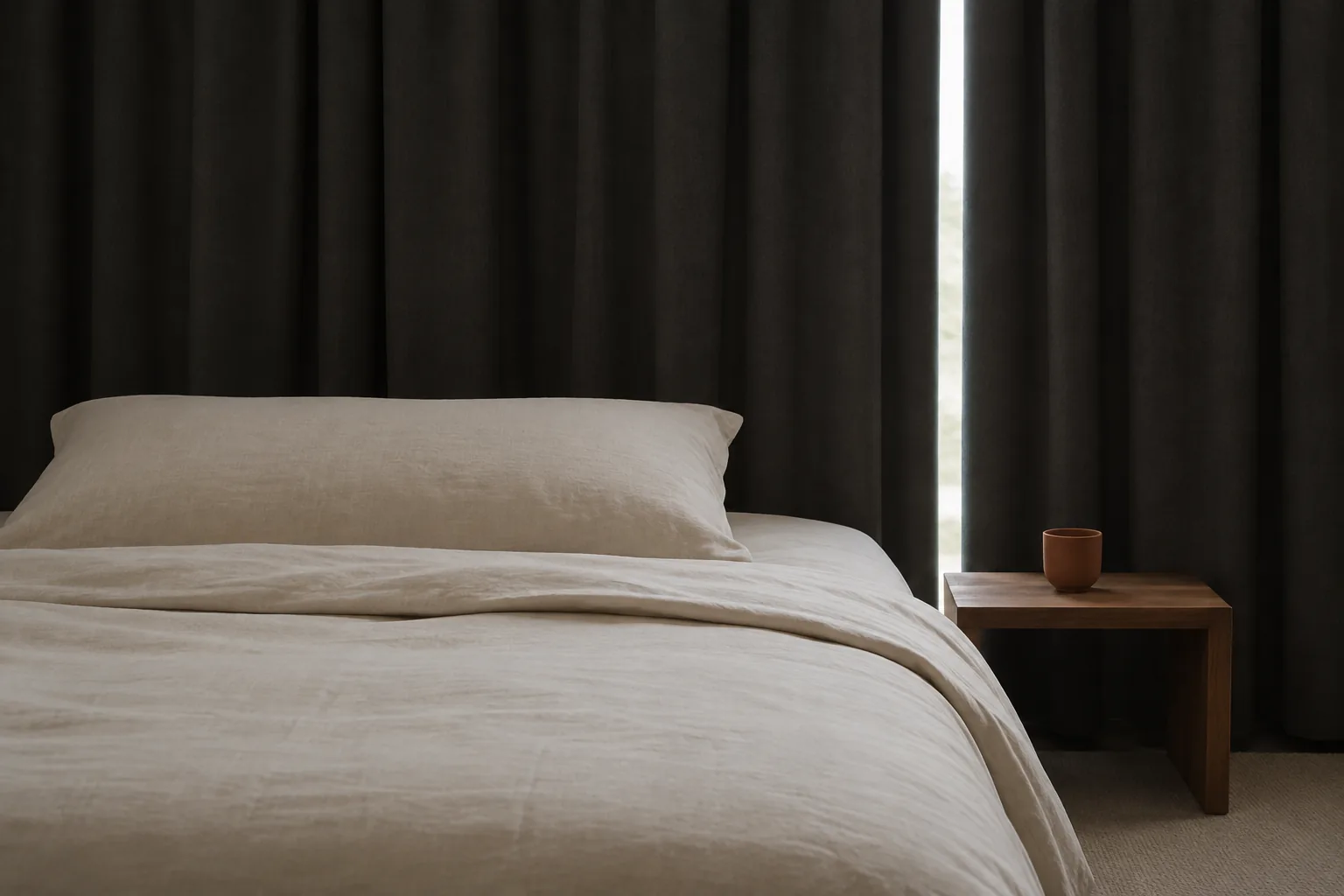
The short version: Sleep is personal, and for almost everyone it gets planned around work rather than the other way round. Mine is built around a job that runs from late afternoon into the night, and that has never been the problem. The number of hours is what matters to me: six as a floor, a nap if I miss it, and more rest on the days I train, because sleep is where the gym actually pays off. Here is what I do, what breaks it, and what a bad night costs.
Your sleep is built around your job
Most sleep advice quietly assumes you work nine to five. Lights out at ten, up at six, coffee by seven.
Plenty of people do not live like that, and I am one of them. My work runs from late afternoon into the night, so I sleep through part of the day.
It has never been the problem for me. As long as I get somewhere between six and nine hours, when I sleep does not seem to matter much. How much I sleep does.
So the first thing I would tell anyone is to stop measuring yourself against a schedule built for somebody else's job. Work out the hours you need, then find where they fit around the life you actually have.
My number: six is the floor
I aim for a minimum of six to seven hours. Between six and nine, I function properly.
I should be honest that this sits a little below the usual guidance, which puts adults at seven hours or more. Six is my floor, not a target, and I am not recommending you copy it. It is the minimum I hold myself to.
What I do when I miss it is the part that actually matters.
Naps are not lazy
I used to avoid napping.
Now, if I have not had six hours, I nap — anywhere from fifteen minutes to an hour. I treat it as part of recovery and part of getting work done, not a failure.
The research is on my side here. Studies on athletes have found that a nap after a short night improves physical performance, reaction time and mood. Longer naps tend to help more, with one catch: the longer you go, the more likely you are to wake up groggy rather than refreshed.
I only nap when I am under my floor. On a night where I got my six or more, I do not need one, and I do not take one.
Sleep is where the gym pays off
This is the part I most want you to take away.
Training is not what builds muscle. It is what asks for it. The rebuilding happens afterward, and sleep is a big part of what lets it happen.
The evidence on this is blunt. In one study, a single night with no sleep cut the rate at which muscle rebuilt by about 18 percent compared with a normal night. That is one night. It was a small study — thirteen young adults — but the direction matches everything else on the subject.
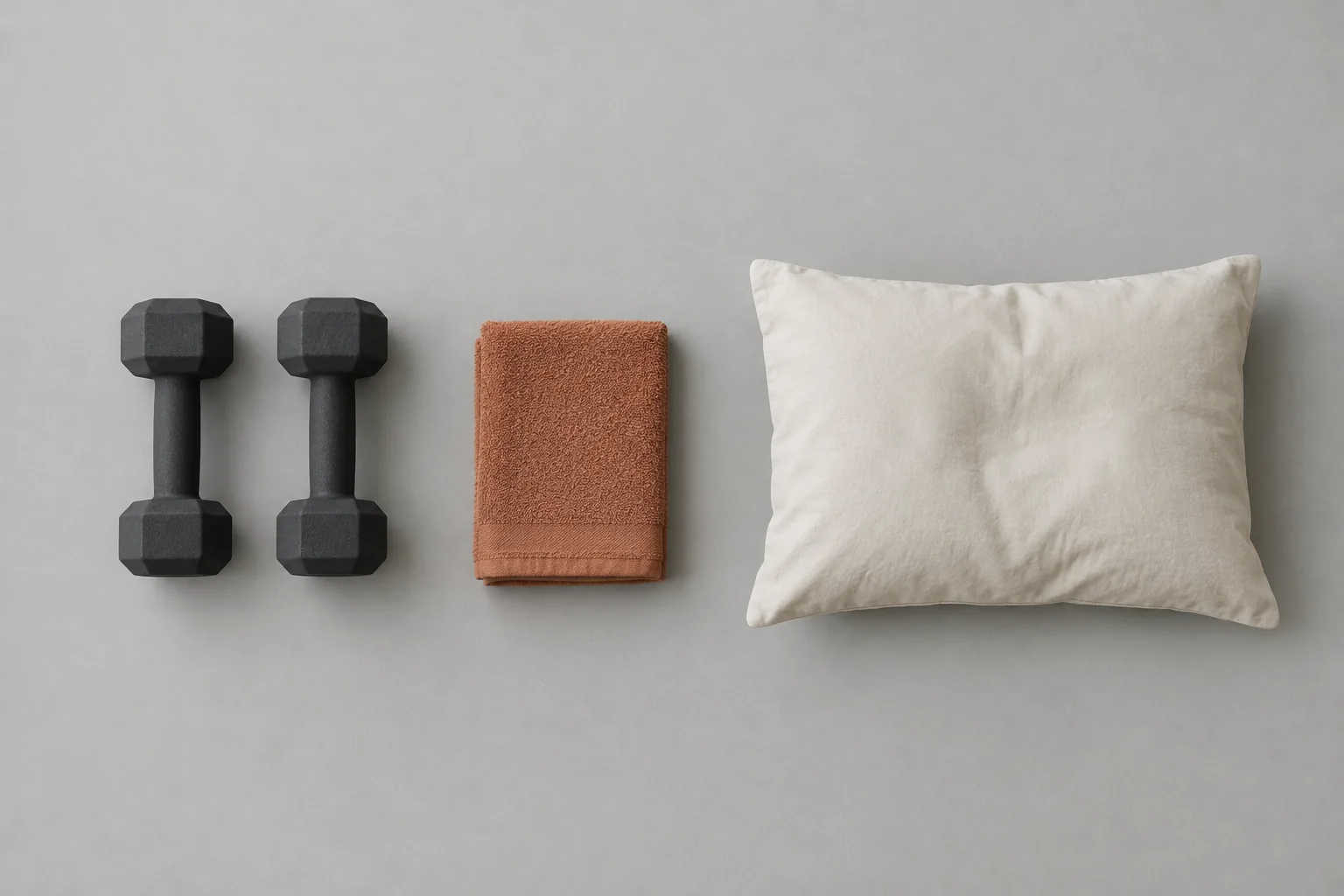
So on the days I train, I try to get more rest, not less, for better recovery overall.
For the last couple of months I have been training six days a week, with one rest day in the middle. I am changing that up at the moment to make room for Muay Thai, so I will leave the details of the routine for another article. The principle does not change with the program: the effort you put in at the gym only turns into results if you give your body the hours to use it.
The nights I lie awake
My bad nights almost all look the same. I lie awake for literally hours, thinking about far too many things — work, life in general, whatever my brain has decided needs solving at that exact moment.
I have written before about how stress reaches my skin through my sleep. It does not go straight to my face; it goes to my sleep first, and the bad sleep does the damage. That is still the single most consistent pattern I have.
I do not have a clever fix for a racing mind, and I am not going to invent one.
If you are lying awake like that most nights, for weeks on end, that is worth raising with a doctor rather than trying to fix with a routine.
What a bad night does to your face
The morning after a bad night, I can see it.
- I look puffy. It is noticeably worse if I have been drinking the night before.
- Pimples start showing up.
- My whole body feels sluggish.
The puffiness is not in my head. In one study, people photographed after a night without sleep were rated by strangers as having more swollen eyes, darker circles, paler skin and droopier corners of the mouth than after a normal night. They were also rated as looking sadder.
That last part is the one that stays with me. Other people read a short night on your face before you have said a word, which is exactly the kind of first impression nobody tells you about.
What I actually do before bed
Two things happen every night without exception: a shower and my skincare. By the time I go to bed, the night routine is done.
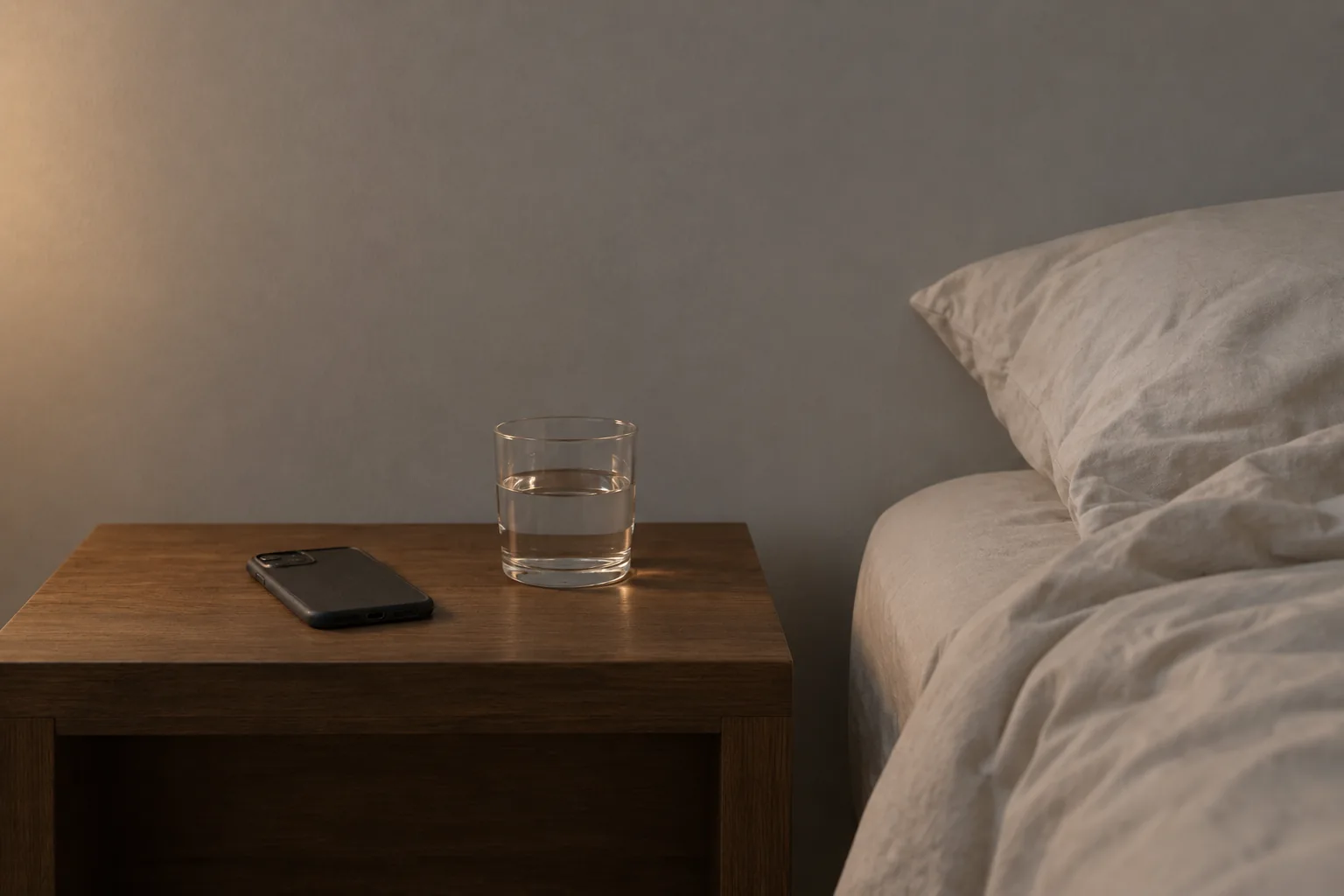
The less flattering part: I doomscroll. I try to keep it limited, and I do not always manage it. I would rather tell you that honestly than pretend I put my phone away an hour before bed every night. I don't.
Zero caffeine, which I can't take credit for
I do not drink coffee and I have no caffeine at all. That is unusual, I know.
It also means I cannot tell you what cutting it out does, because I never had the habit in the first place. If you drink it, the only thing I would point out is that it is worth noticing how late in the day your last one is — especially if your day runs late like mine.
The room
Two things about my bedroom do most of the work.
Blackout curtains, always. Because I sleep through part of the day, without them the room is simply too bright. If your schedule looks anything like mine, this is the first thing to buy.
Cool the room, then turn the AC off. I run the AC before bed to cool the room down, then switch it off as I am about to fall asleep. My body temperature drops while I sleep, and if I leave the AC running, I end up so cold that getting out of bed takes far longer than it should.
I worked that out by feel, and it turns out to match how sleep works. Your body temperature naturally falls as you fall asleep and keeps dropping through the night, and a cool room helps that happen. Cooling the room first is the part that helps you fall asleep.
Where to start
- Pick your number, not someone else's schedule. Work out how many hours you need, then fit them around the job you actually have.
- Set a floor. Know the minimum you hold yourself to.
- Nap when you miss it. It is recovery, not laziness.
- Sleep more on training days, not less. That is when your body is doing the rebuilding.
- Make the room dark and cool. Blackout curtains if you sleep in daylight. Cool it down before bed.
- Do the boring night routine every time. Shower, skincare, then bed.
- Be honest about your phone. I am still working on that one.
Like the three products I tell everyone to start with, none of this is complicated. Sleep is personal, and it will always bend around your work. But the rebuilding your body does while you sleep does not bend, so give it the hours.
Filed under
One note on transparency: no brand mentioned on this site is sponsoring us, and we don’t use affiliate links. Everything we recommend is something we’ve personally used. Nothing here is medical advice. If any of that changes, you’ll hear it from us first.
Don't miss the next one
New articles straight to your inbox. No spam, no fluff — just what actually works.
Free. Unsubscribe anytime.