
He Was 40 and Could Do 100 Push-Ups. I Had No Excuse.
A colleague fourteen years older set me a challenge on the way to lunch. Here's how I met it, and what it turned into.

RayCo-Founder & Editor
The short version: At 26, a colleague asked me on the way to lunch how many push-ups I could do. I did not know — maybe twenty at a time, maybe twice a day. He was 40, and he could do a hundred a day. I had no excuse for the gap, so I set out to close it. Below is exactly how I built up to a hundred, what it turned into, and the belief that got me started, which turned out to be only half true.
The question on the way to lunch
It was not a gym, or a race, or anything that would make a good story. We were walking out of the office to get lunch.
He and I had started at the company in the same intake, which is the kind of thing that makes two people close fast. Out of nowhere he asked me: how many push-ups can you do?
I genuinely had no idea. I told him probably not more than twenty in one go, and probably not more than two sets in a whole day.
He said: "Bro, I'm 40, and I can do a hundred in a day. Obviously not all in one sitting."
It was not a boast. He said it the way you would mention what you had for breakfast. That was what made it land.
I had no excuse, and that was the worst part
I tried to find one. I could not.
We did the same job. We worked the same hours. We were both in relationships, so it was not that he had more free time than I did or fewer people depending on him. Whatever I might have blamed — work, tiredness, a busy life — applied to him exactly as much as it applied to me.
The only real difference between us was that he had done something about it and I had not. And he was fourteen years older.
I was embarrassed and motivated at the same time, which is an uncomfortable combination and, it turns out, a very effective one. He had given me a number, so I took it as a challenge: a hundred push-ups and a hundred sit-ups a day.
The belief that got me moving was only half true
The more I thought about it, the more worried I got.
I was already 26. My reasoning went like this: fitness only gets harder from here, so whatever body I have built by 30 is probably the body I am stuck with. That thought frightened me into starting, and I am not going to pretend it did not work.
But it is only half right, and the half that is wrong matters.
The part that holds up: muscle loss does start around 30. It runs at roughly three to five percent a decade, and it speeds up again later in life. Waiting does make it harder.
The part that does not: you are not stuck with anything. Strength training maintains and rebuilds muscle at any age, and older adults often make larger strength gains than younger ones when they start. The body you have at 30 is not a sentence.
And the proof was standing right next to me. The man who set me the challenge was 40 and fitter than I was. If 30 were a locked door, he would not have existed.
So if you are reading this at 35 and thinking you missed the window — you did not. It is harder than it would have been, and it is still entirely open. The only version of this that is genuinely too late is the one you never start.
How I actually got to a hundred
Not in a week, and not by trying to do a hundred on the first day.
I have written before about starting with almost nothing — ten push-ups, done badly, in my room. That was the first step here too. What I did after that is the part worth copying.
I added a little more each week. That is the entire method. Gym people call it progressive overload, and it just means asking your body for slightly more than last time, steadily.
- Week one: 10 reps, 3 sets.
- Then: 15 reps, 3 sets.
- Now: 25 reps, 4 sets — which is the hundred.
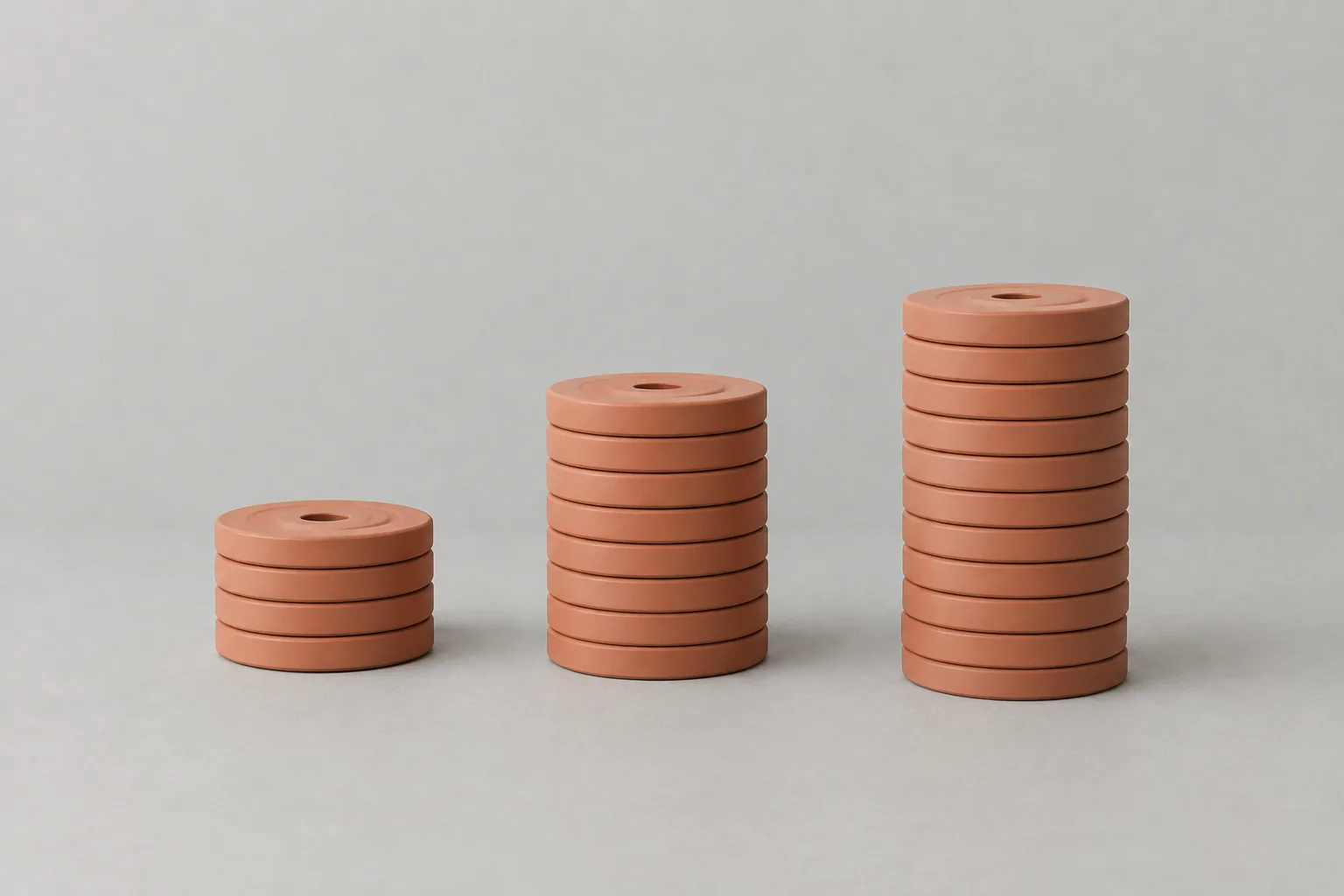
That is it. No program, no coach, nothing clever. Each step was small enough that it never felt like a wall, and there were enough steps that it added up to the number he gave me.
The one change I made along the way: I dropped the sit-ups. I swapped them for V-crunches and ordinary crunches, which I found worked my stomach more directly. That is my experience rather than a verdict on sit-ups, but I have not missed them.
What if you cannot do ten?
Then start lower, and do not treat that as a problem.
I could manage ten when I began, but plenty of people cannot, and the method does not care where you start. It only cares that next week is slightly more than this week.
Two easier versions will get you there. These are the standard starting points rather than something I needed myself:
- Push-ups against a wall or a counter. The more upright you stand, the easier it is. Step your feet further back as it gets easier.
- Push-ups from your knees. Same movement, a fraction of the weight. Move to your toes once your knee sets feel easy.
Start with whichever lets you do a few clean sets, then apply exactly the same rule: a little more each week. A wall push-up done consistently gets you further than a full push-up you attempt once and abandon.
What a hundred push-ups turned into
The hundred was the start rather than the point.
Somewhere along the way the goal changed. It stopped being about matching a number a colleague had thrown at me, and became about building a body I could actually be proud of going into my thirties. The push-ups became one part of a routine that grew well beyond them, gym included.
I think that is the most honest thing I can tell you about challenges like this. The specific target does its job by getting you moving. It is rarely the thing that keeps you going. What keeps you going is noticing, a few months in, that you have become someone who trains — and not wanting to stop being that person.
Nobody warns you about the pants
Here is a practical thing that no fitness advice I ever read mentioned.
When you lose fat and get leaner, your pants stop fitting. Everything goes loose around the waist. Belts stop being enough. You end up looking like you are wearing someone else's clothes.
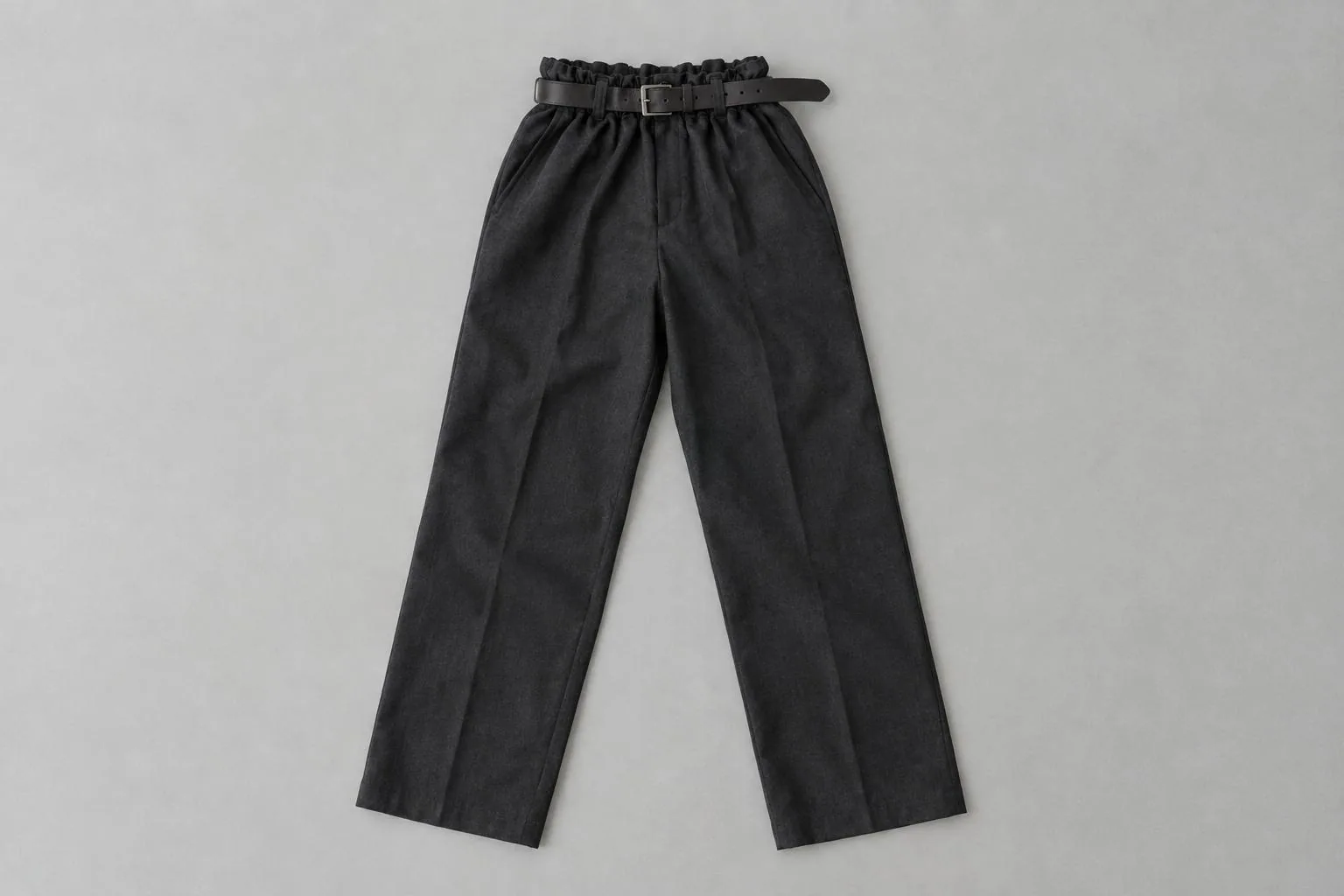
So budget for it. At the very minimum you will need new pants, and it is worth knowing that before you are standing in front of the mirror wondering why everything you own suddenly looks sloppy.
It turned out to be good timing for me. Getting fitter was also what pushed me to start dressing better rather than hiding in sportswear — and a wardrobe that no longer fits is a strong nudge in that direction whether you want one or not.
Why it never stalled
People ask what I did when I fell off. The honest answer is that I have not, and I think I know why.
I built it slowly enough that it never became a fight. Ten reps to fifteen to twenty-five, over weeks, is not the kind of increase that makes you dread the next session. So I never reached the point where skipping felt like relief.
It is now simply part of my routine, the same way my skincare stopped being a decision and became closer to brushing my teeth. Both started the same way: small enough to keep, three products rather than ten, ten push-ups rather than a program.
The clearest sign of that is what happens when I stop. Some weeks I train lighter on purpose to let my body recover, and some weeks illness or travel takes the choice away. In those weeks I feel strange for not training. That is not discipline. It is just what happens when something has been part of your week long enough that its absence is what feels wrong.
What I would actually tell you
- Find out your real number. Most of us have no idea what we can actually do. Do one honest set and write it down.
- Stop assuming you are fine because you are young. I was 26 and a 40-year-old was fitter than me. Age was covering for me, and it would not have kept doing that.
- Do not believe the door shuts at 30. It gets harder. It does not close. Strength training works at any age.
- Add a little each week, not a lot. Small enough steps that you never dread the next one. That is what makes it last.
- Keep the target, but expect it to change. A number gets you moving. Becoming someone who trains is what keeps you there.
- Budget for new pants. Genuinely. You will need them.
I still think about that walk to lunch. He was not trying to teach me anything. He just asked a question and told me a number, and it did more for me than any program I could have bought.
One note on transparency: no brand mentioned on this site is sponsoring us, and we don’t use affiliate links. Everything we recommend is something we’ve personally used. Nothing here is medical advice. If any of that changes, you’ll hear it from us first.
Don't miss the next one
New articles straight to your inbox. No spam, no fluff — just what actually works.
Free. Unsubscribe anytime.